
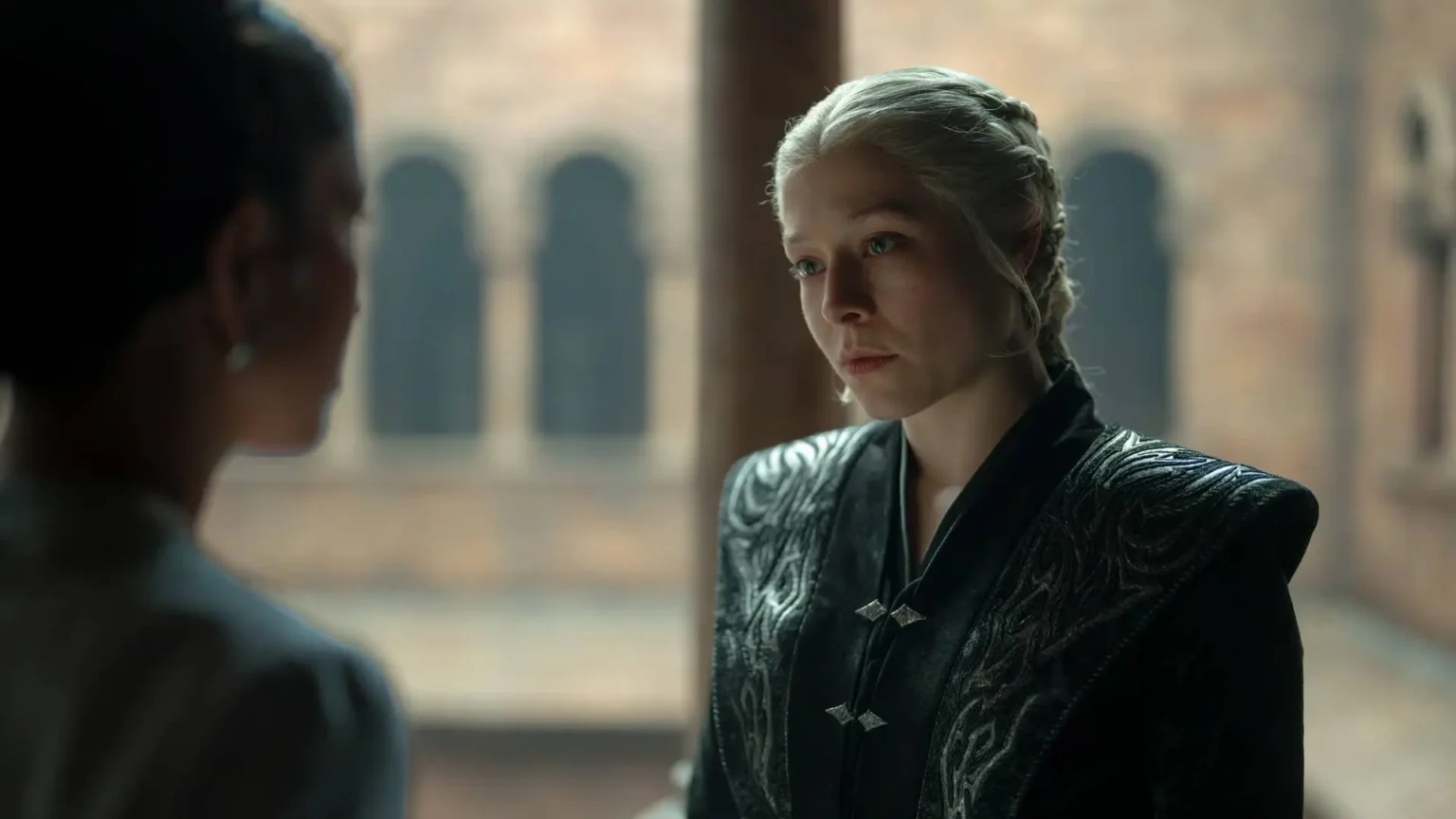
With the third season of House of the Dragon in full swing, HBO’s prequel is busy laying bare how power, loyalty, and survival meet their ultimate test in Westeros. Nowhere is this more evident than in the changing and intensely personal dynamic between Queen Rhaenyra Targaryen and her master of whisperers, Mysaria, a development that has been under a microscope. It is an alliance of more than mere convenience; the way their relationship has unfolded has set off a good deal of debate in both critical and fan circles over whether Rhaenyra has a true partner or is exposing herself emotionally in a manner that could see her claim to the throne unravel.
The Politics of Intimacy and the Shadow of Isolation
A glance at the Red Keep reveals the strain on Rhaenyra and Mysaria. The queen is all but isolated there, contending with a council that does not function and the psychological after-effects of Daemon’s own brand of machinations in the Riverlands, let alone a crown she is struggling to consolidate. In such circumstances it is natural for Rhaenyra to turn to Mysaria for something beyond intelligence, for a measure of solace. A common past of being marginalised and the trauma that comes with it is what cements them together and allows the queen to drop her royal guard for once.
But that reliance carries inherent vulnerability. To the discerning viewer or critic, there is peril in a sovereign who would go to an advisor like Mysaria for intimacy and to be validated, given that her core currency is information and getting by. Mysaria may have warded off blind spots for Team Black with her advice, but her loyalties are self-serving in the end. And when a queen starts to want an emotional crutch from one who is engaged in a game of shadows of her own, it becomes hard to tell where the confidante ends and the puppet-master begins.
How Repeating the Errors of History is a Danger
There is a certain fascination to the way the story has taken this turn, not to mention the anxiety it sows among Team Black partisans. It underscores Rhaenyra’s ongoing struggle to project imperturbable leadership. Viewers watch the queen’s arc in the series tip back and forth from a kind of hard, visionary command to self-doubt of the most debilitating sort, prompting her to look for some reassurance outside that is not to be had inside. In seeking with Mysaria a romanticized closeness of the type she has used in the past to get validation from less than dependable partners, the narrative is in danger of showing a leader mired in emotional stagnation as opposed to one who is evolving.
Looking ahead to Tumbleton and the other calamities the war is hastening towards, here such fissures between people have a geopolitical dimension to them. With Team Green weaponizing any weakness they can spot, a sovereign whose inner circle is run by private designs and affections is open to being undone from within. The series finds itself on a fine line in deciding if this romance is to be seen as a tragic refuge from the savagery of war or the very blind spot that will bring down Rhaenyra’s rule.
Power and the Individual
Setting aside the machinations in the war room for a moment, the talk of Rhaenyra and Mysaria comes down to an old dramatic adage: power does not corrupt all by itself, it is the unspoken compromises made in private that do the corroding. For women in a feudal order where they are but pawns or symbols, what the two have could be viewed as a hazardous entanglement that vitiates political sense as much as an act of female insubordination. It raises the question of how much real intimacy a ruler can allow when the dynasty is on the line.
In the end the storyline gives greater heft to the tragedy of the Dance of the Dragons. The dragons and the armies provide good pyrotechnics, but the battles of note are in the hallowed silence of the Red Keep, where trust is in short supply and cold strategy is no match for loneliness. Should Rhaenyra fail to square her attachments with what the crown requires, posterity will view her as the one who engineered her own demise, a victim of patriarchal treachery notwithstanding