
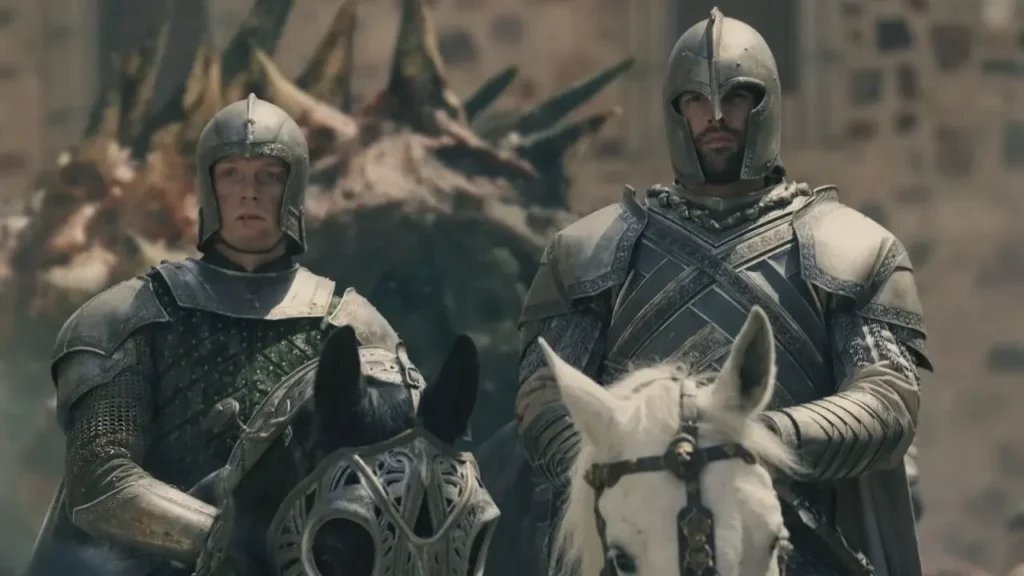
It is to find the central conflict in HBO’s adaptation of George R.R. Martin’s Fire & Blood resting solely on the matter of who has the stronger claim to the Iron Throne or the sheer, unadulterated power of an adult dragon. The show’s narrative is far more deft at portraying the psychological fissures and ill-fitting alliances that riddle the factions from within, not to mention the forced marriages.
Then there is the matter of the Green faction and its two most interesting figures: Ser Criston Cole (Fabien Frankel) and Ser Gwayne Hightower (Freddie Fox). Theirs is a partnership defined by friction and tension, yet it is this very dynamic that propels them forward. While they may be in service to King Aegon II under the same standard, the men could not be more different in their outlook on a war of fire and blood.
A Clash of Class and Cynicism
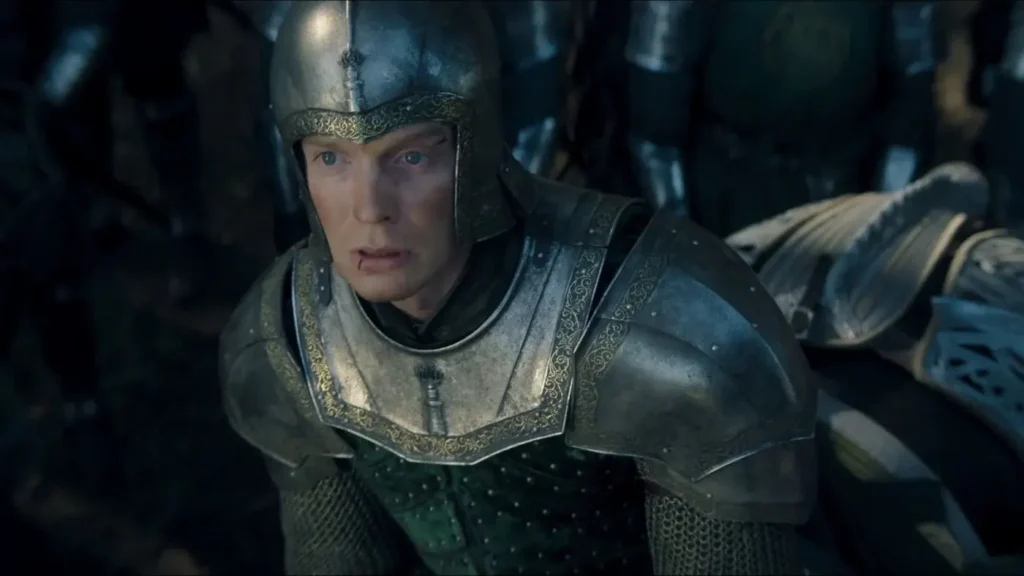
There is a clash of class and cynicism at play here. To make sense of the hostility – and the grudging respect that follows – between Cole and Gwayne, one has to consider their origins. Gwayne is the very model of a highborn aristocrat; as Otto Hightower’s firstborn he was brought up in the refined milieu of Oldtown where chivalry and good breeding are as much a law of nature as anything else. He sees the trappings of his station as what keeps society from falling apart.
Cole is another story altogether. An outsider who put himself above the rigid class structure with nothing but ambition and a talent for killing, he has gone from the son of a Dornish Marches steward to Hand of the King. His dealings with the nobility have been purely transactional. And after seeing dragons turn whole armies to cinders, any notions he once had of divine right or honour have been thoroughly dispelled. So when Gwayne comes onto the scene and makes some pointed comments about Cole’s rise and his father, it is more than a bit of petty rivalry. It is old aristocratic snobbery running headlong into a self-made realist.
Trauma, Survival and the Weight of Command
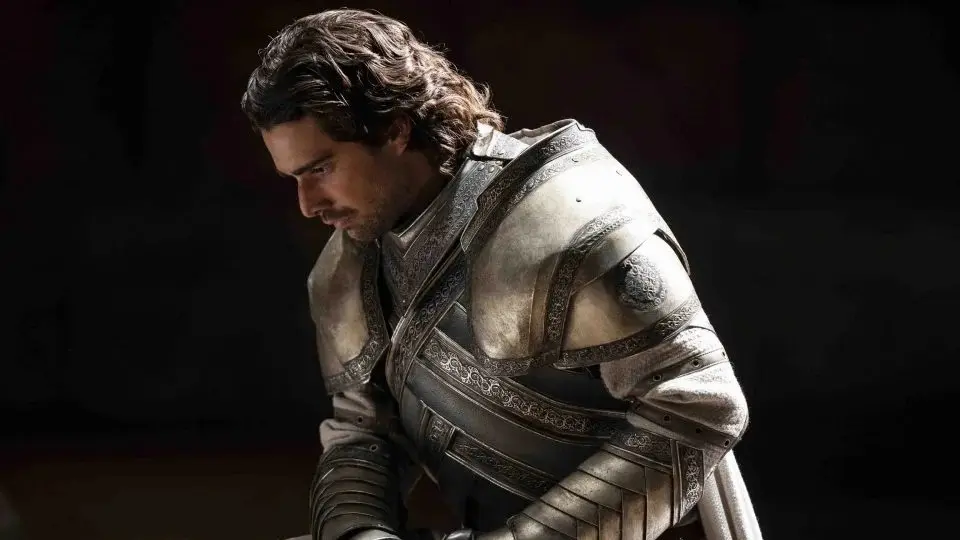
There is no question that the campaign in the Crownlands has changed the two men at a psychological level. The ordeal of it all, not least the pyrrhic tactical disaster at Rook’s Rest, leaves an indelible mark. To stand before dragonfire and see thousands go up in flames is to have any lingering romance one might have had for war cauterised.
But the trauma they carry shows itself in entirely different forms. Cole has been reduced to a kind of fatalistic nihilism; he is as good as dead in his own mind, as are his men. He will do his duty, but on his own terms and with a grimness that spares him from having to oblige the whims of his highborn superiors. Gwayne is at odds with himself, trying to make sense of the march’s uglier side while remaining true to the honour code of his upbringing. He makes what efforts he can to impose some moral order on a campaign that has left such things behind.
In this way they form an odd dramatic pair: the world-weary cynic and the noble who is finding it harder to hold on to his dignity in the ashes.
The Tragedy in the Margins
One could see the partnership of Cole and Gwayne as a microcosm of the Green cause’s self-destruction as the Dance of the Dragons descends into chaos. They are held together by politics and must put up with the erratic megalomania of Prince Aemond and the disintegration of the royal family.
It is more than a typical fantasy war story. Whether you look at it as character work or political subtext, their arc gives the material a certain elevation. It makes plain that the price of civil war is not only in the castles lost and the earth scorched, but in the slow wearing down of those compelled to wage it.