
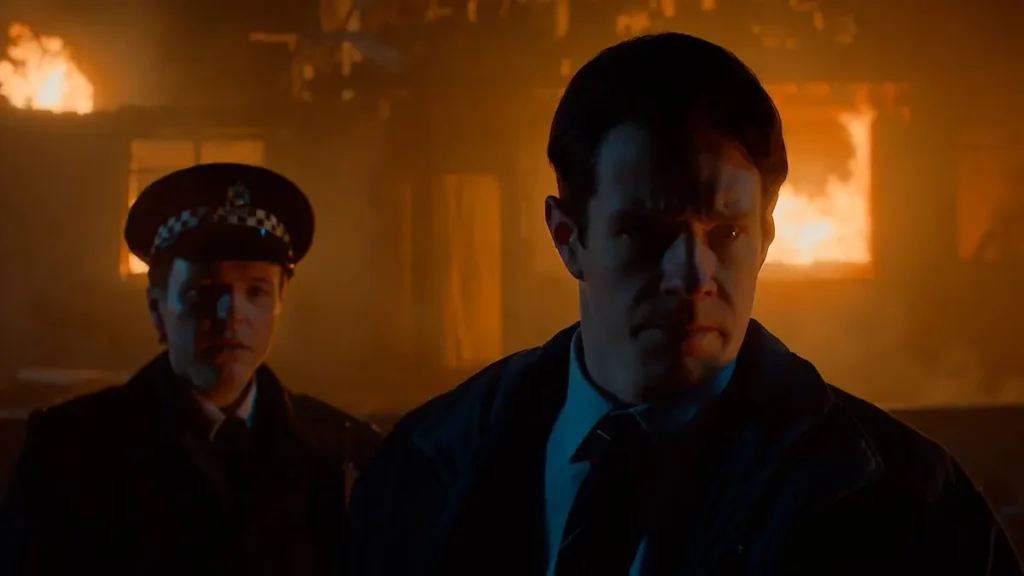
The 259 souls on Flight Pan Am 103 and the 11 in the Scottish town of Lockerbie who perished when it was blown from the skies on December 21, 1988, left a dark mark on modern aviation. In its telling of the disaster, Netflix delivers a harrowing drama with The Bombing of Pan Am 103, one that forgoes the usual procedural fare to zero in on the human toll and the protracted, painful struggle of the families to demand accountability. The series is no ordinary thriller; it stands as something of a monument to the grief and political obfuscation that can be found under the shadow of terrorism, and to the unyielding quest for truth that has been going on for decades.
A Night in Lockerbie When the Sky Came Down
The series offers a meticulous re-telling of what was to be an unremarkable flight from London to New York and how it turned into a horror. Plastic explosives, stowed in a cassette player and routed through the luggage system, tore Flight 103 apart at altitude; what was left of the plane and its passengers was scattered across the rural landscape. For the people of Lockerbie the consequences were a forensic disaster of a kind not seen before. The quiet of the town was shattered in an instant and whether they were of the emergency services or simply residents, all had to confront the unspeakable and yet show a degree of compassion and dignity for the dead.
Beyond the blast itself, the story goes on to examine the ensuing cover-up of a geopolitical nature and the labyrinth of the investigation. One sees Dr. Jim Swire and the rest of the bereaved relatives in their long running conflict with the indifference of officials and the stonewalling erected by foreign diplomats and corporations; in their pursuit of justice they are the public face of the campaign. And when Libyan intelligence men Abdelbaset al-Megrahi and Al Amin Khalifa Fhimah were brought to trial, the whole episode exposed a state terror so involved as to render any accounting of the intelligence failures that should have prevented the catastrophe impossible to fathom.
Monument to the Grief of Parents
There is a certain heft to the way Netflix frames it, in presenting grief as an inescapable part of one’s existence. One does not get the tidy wrap-ups of your average television crime drama; instead the programme gives voice to parents and spouses who will not have their departed set aside and remembered only as such. The story is told through Dr. Swire, who evolves from a bereaved father to an investigator of some repute, and in that is its central theme: state inquiries and a legal verdict are no substitute for accountability, and a shattered family cannot be mended by bureaucratic accommodation.
In the final analysis it is a historical recreation of a sobering kind, showing the blood and heartbreak that is the price of security in the skies. As the Lockerbie affair threatens to become a mere footnote of the last century, the series focuses on the survivors’ fortitude, which is as good a memorial as one could want for the people of Lockerbie and those on 103.
Memory and the Deficiencies of International Justice
In the case of Pan Am 103 one is forced to examine the give and take that characterises global politics. The fact that the legal process was historic did not stop the kind of diplomatic manoeuvring and freeing of prisoners that left many a family to conclude the system they trusted had let them down. One sees the dilemma of terrorism in its modern form: it is no easy task for the courts to prosecute mass murderers when the state has them under its wing. An institutional shortcoming of this order is not merely a matter for history books but a warning to be heeded. When a government prioritizes its strategic alliances before an unvarnished truth, then the onus of history falls to the ordinary person. By way of the series, which gives voice to those who will not be silenced, there is ample evidence that what preserves the past is the resolve of the survivors, not any treaty or file in an archive.