
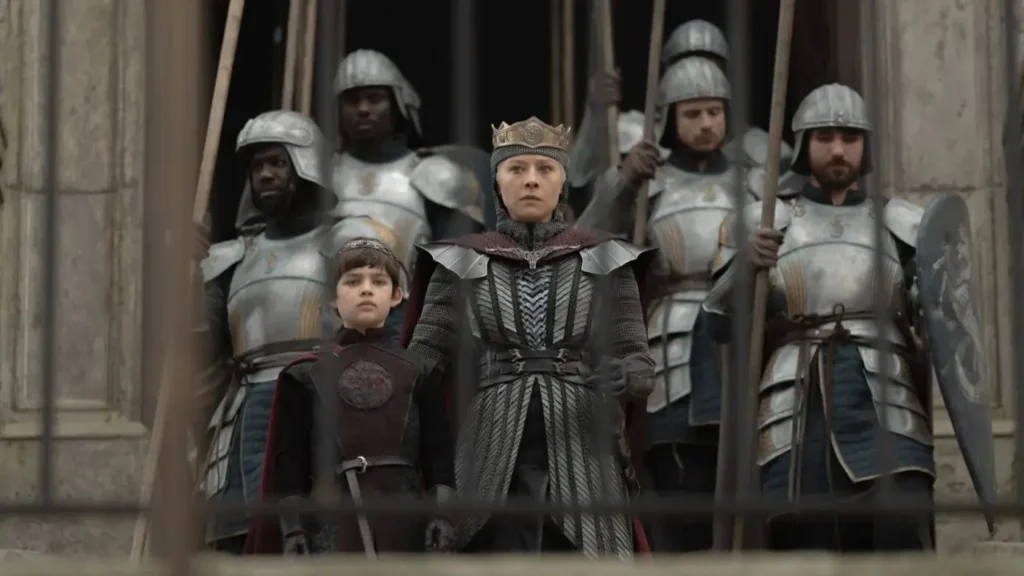
House of the Dragon Season 3 finale transports The Dance of the Dragons to a far more sinister realm. Previous season finales were more about armies getting in position, clandestine meetings and characters trying to stay one step ahead of their enemies. This time there is much less room for this sort of political maneuvering. Some of the worst decisions of Rhaenyra Targaryen’s entire reign have been made, and the war has finally reached the point where everything is starting to crumble with brutal battles and betrayals.
The finale is particularly bleak, because no one really wins. The episode shows just how much Rhaenyra has lost, even while sitting on the Iron Throne. Her fear and paranoia are starting to take hold as the Greens gain ground on the battlefield and Aegon II’s survival threatens to unravel all she has fought for. By the time the credits roll, the Targaryen civil war has outgrown a succession dispute. It has become a conflict in which most parties are changing, usually for the worse.
The Season 3 Finale Summary: Things to Know
- Is Helaena Targaryen dead? Yes, she is. Helaena has been traumatized and forced by Rhaenyra to make a public appearance and thus refuses to participate in the Great Sept. Helaena is kept in captivity and forced to eat on Rhaenyra’s orders, before falling from a window of the Red Keep onto the spikes below.
- Is Aegon II alive yet? Definitely. Grand Maester Orwyle tells Rhaenyra: Aegon II is alive, Sunfyre has been seen and there are increasing rumors throughout Westeros of the Green King’s imminent return.
- Who won the first battle of Tumbleton? Ulf the White betrayed the Blacks, turning Silverwing against his own allies, and the Greens achieved a crushing victory.
- Who is Prince Daeron? The youngest son of Alicent and Viserys, now a knight and key military commander, has arrived from Oldtown riding his cobalt-blue dragon, Tessarion, with the remaining Green forces.
Rhaenyra’s Path to Tyranny
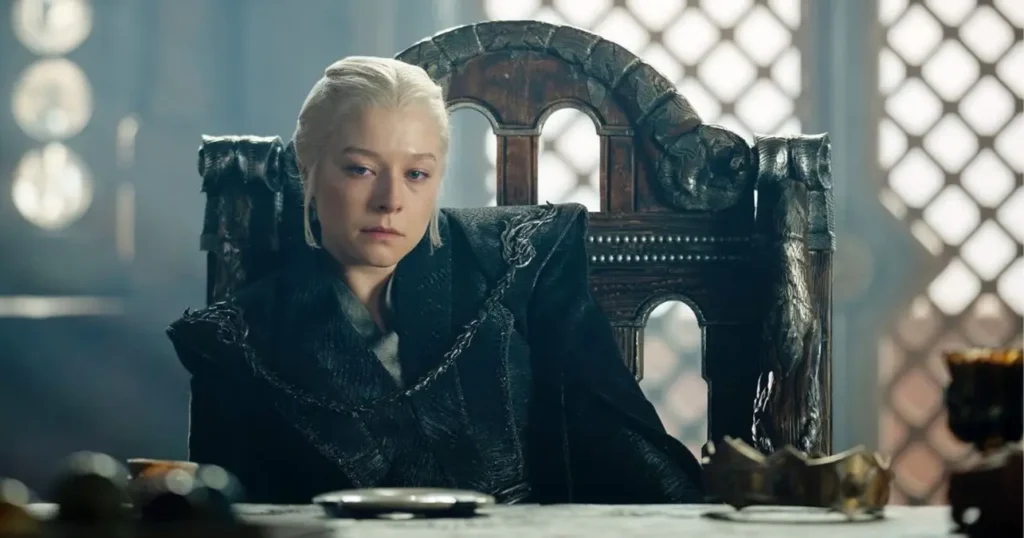
The emotional heart of the finale is Rhaenyra (Emma D’Arcy), who has reached a place where her unshakable dedication to preventing the realm from falling apart is becoming harder to separate from her fear of losing power. Grand Maester Orwyle kicks off the episode with the heartbreaking news that Aegon II is alive, Sunfyre has been seen, and the rumors of the Green King’s survival are spreading across Westeros.
Rhaenyra finds herself suddenly faced with the possibility that the war might turn against her once again, despite her long-standing belief that Aegon was no longer a threat. Her belief in Viserys’s prophecy only makes her reaction more extreme, as she convinces herself that she has a greater purpose and that defeating her enemies is necessary for the future of the realm. This belief however only fuels her paranoia and she begins to see the possibility of betrayal in almost any situation.
Rhaenyra instructs Daemon to keep searching for Aegon with the dragonriders in Tumbleton, but her problems in King’s Landing are getting just as bad. Suddenly, one of her most trusted advisers and allies, Mysaria (Sonoya Mizuno), is someone whose loyalty can’t be trusted. This is also representative of Rhaenyra’s growing paranoia about the people around her, and how isolated she’s become. The problem is she’s no longer just protecting herself from people who might betray her. She’s starting to lash out at people because she believes they might betray her, which becomes more and more important as the episode goes on. The implications are hard to deny when the Queen that thought she could bring something better to the Iron Throne is now making choices based on fear.
The Terrible Last Moments of Helaena
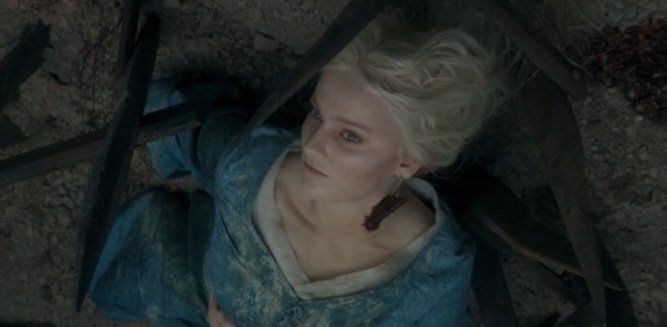
Rhaenyra’s narrative has the darkest character in Helaena Targaryen (Phia Saban), who has already undergone more trauma than any other character in the war. Rhaenyra has decided to use Helaena to appease the people of King’s Landing and shore up her own position. She’s asked the grieving princess to stand with her at the Great Sept.
Helaena’s presence could be a comfort for the people and make Rhaenyra’s claim look more believable in their eyes. But Helaena is not in a position to take on that role. She is deeply traumatized, uncooperative and makes it clear she is not interested in dealing with the Queen. Things get even worse when she tells Rhaenyra, “Our father would despise you for this.”
Rhaenyra responds with anger, not understanding. She orders the Kingsguard to tie up Helaena and make her eat. What was meant to be a political show turns into an act of cruelty. Later that night Helaena jumps from a window in the Red Keep and falls onto the spikes below, dying.
The show’s link between Rhaenyra’s treatment of her and the Queen’s death shifts how the Queen is portrayed. Rhaenyra may still think her actions are justified, but now she’s willing to harm the defenseless to preserve her power. The tragedy is that the closer she gets to the throne, the further she seems to drift from the person who first believed she could rule differently than those who came before her.
The First Battle of Tumbleton Ends in a Massacre
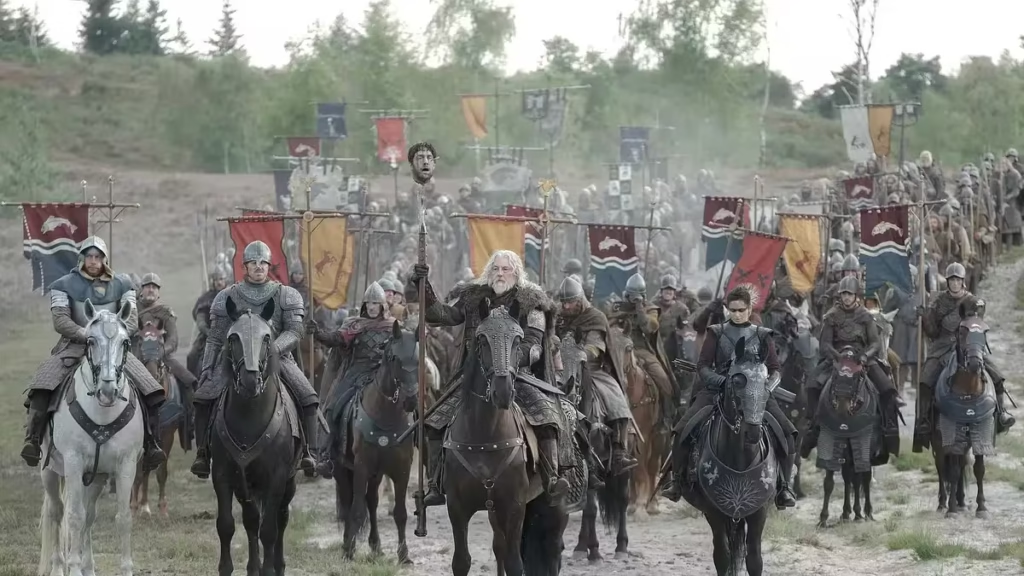
Rhaenyra’s grip on King’s Landing continues to slip and things in the Riverlands go disastrously wrong. The Green army, led by Ormund Hightower, and the Black forces, led by Roderick Dustin and his Winter Wolves, start the First Battle of Tumbleton. One of the defining characteristics of the war is the desperation with which the Winter Wolves enter into the field of battle. They know precisely what they are being asked to do and they are willing to pay a heavy price to get in the way of the Hightower. For a moment it seems as if the Blacks may have gotten an advantage from their sacrifice, but the battle finally turns on a much more unpredictable factor than the strength of either army: the dragonseeds.
Ulf the White (Tom Bennett) has become increasingly hard to control since he claimed Silverwing. His resentment of Rhaenyra has only aggravated matters, for the power of dragon-ownership has become too great. He thinks the Queen doesn’t trust him and doesn’t see what he has done for her. His resentment finally pushes him to make a backroom deal with the Greens.
During the conflict, Ulf turns Silverwing against the people he was meant to be protecting. Instead of fighting alongside Hugh the Hammer (Kieran Bew) he helps wreak havoc on the Black forces and the people of Tumbleton. Silverwing goes on to lay waste to the battlefield and set parts of the town on fire, one of the most unpleasant scenes of the war. The Tumbleton treason had well-nigh hopelessly broken the Blacks.
Roderick Dustin’s Last Stand
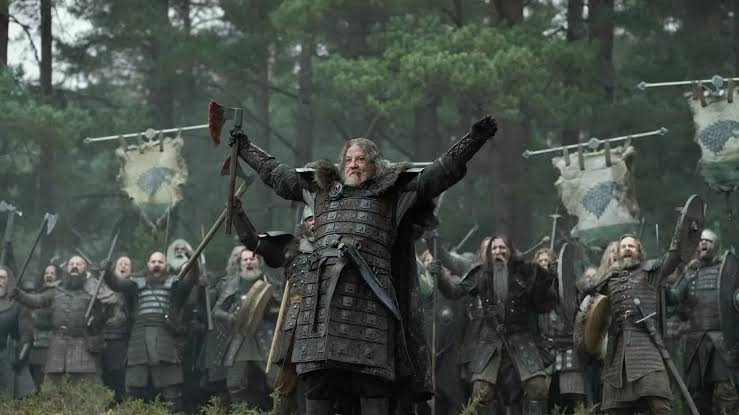
In the midst of the chaos, Roderick Dustin earns one last victory before the battle claims him. The Black commander fights a bloody fight with Ormund Hightower, and kills him eventually. But Dustin is fatally wounded.
His death makes the outcome of the battle all the more bitter, as the Winter Wolves have made significant sacrifices without achieving a significant victory for Rhaenyra. Ormund’s death is important to the Greens, but does not stop their army from surviving the battle, while the Black forces in the Riverlands are basically wiped out. The Greens are coming out with the momentum they desperately needed and Tumbleton is left in ruins.
The battle also illustrates one of the biggest problems with Rhaenyra’s decision to rely on dragonseeds. It was a clever plan to bolster the Black cause by allowing ordinary people access to some of the most powerful weapons in the world. But there was always the possibility that these new dragonriders would not be loyal. Ulf is the most articulate example of what happens when you suddenly give someone huge power with no good reason to remain loyal to the person who gave it to them. This is compounded by Rhaenyra’s increasing distrust of the dragonseeds, creating a feedback loop where she expects betrayal (and in some cases, helps to create the conditions for it).
Daeron the Daring Turns into a Major Threat
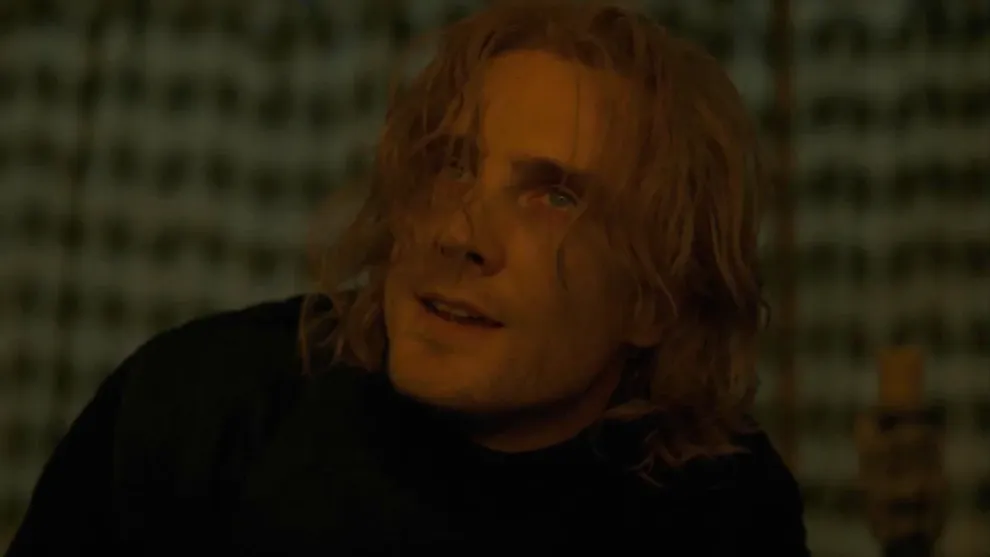
One of the biggest changes for the Green side after Tumbleton is the arrival of Prince Daeron Targaryen as a major military leader. Up until this point, Daeron has not been heavily involved in the main action, but this will change drastically in the battle. Ormund Hightower knights the young prince just before the battle and Daeron, along with his dragon Tessarion, takes a more active part in the campaign.
Tessarion is one of the most unique dragons in the war, thanks to her vivid blue color. But Daeron soon reveals that he is more than just another prince with a dragon at his command.
This makes Daeron more pragmatic and restrained than Aemond, whose decisions are often driven by rage, pride and vengeance. The chaos at Tumbleton gives him the chance to gather the remaining soldiers and establish himself as a leader capable of commanding an army. Which makes his rise especially dangerous for Rhaenyra because the Greens have a new Targaryen leader who seems able to attract support and not just command it. By the finale’s end, Daeron is no longer a distant figure mentioned in reports from Oldtown. He’s a real military threat with Tessarion at his side, moving on to the next stage of the conflict with an army behind him.
The Effect of the Finale on the Narrative of Fire & Blood
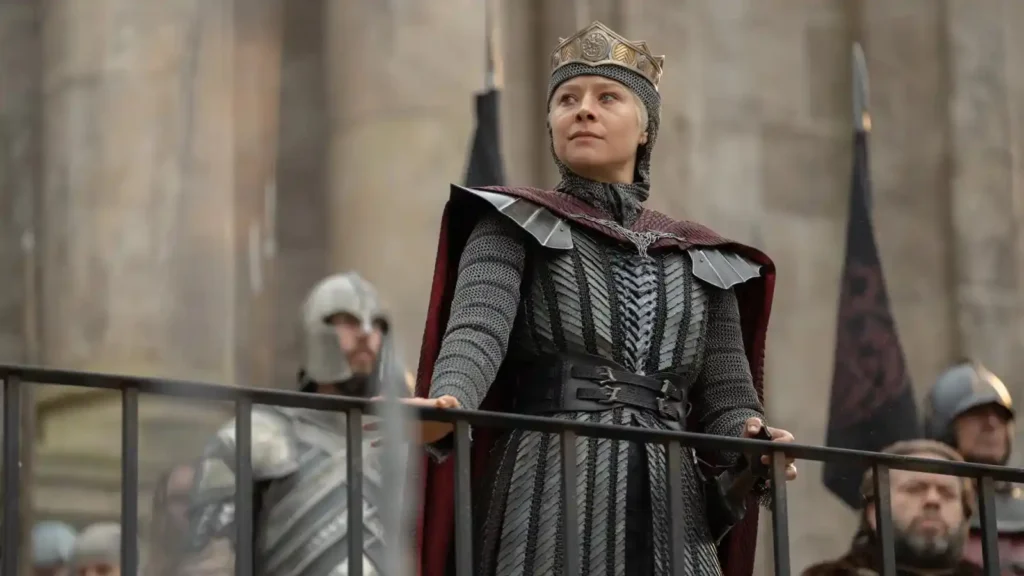
Viewers familiar with George R.R. Martin’s Fire & Blood will note that the series takes some substantial liberties with the way these events play out. Perhaps the most eloquent example is Helaena’s death. In the book, the suicide is associated with the trauma she experiences after Blood and Cheese, the depression and the cruel rumors that follow. The TV adaptation places more of the responsibility on Rhaenyra by stressing the importance of how she treats Helaena in the events leading up to her death. That decision makes Rhaenyra’s transformation into a more authoritarian ruler far more direct and gives her a far darker role in the final days of Helaena.
The Tumbleton story is also handled in a unique way. The Dance in Fire & Blood is often told as history. Ulf’s betrayal of the cloak, for instance, is mainly presented as a tale of opportunism and greed. It spends more time exploring the consequences of just letting common folk have access to dragons all of a sudden.
Ulf, along with the other dragonseeds, has a position of power most nobles could only dream of, yet the ruler who gave them that power treats them with suspicion. This creates a volatile situation and the speed at which it can collapse is shown by Ulf’s betrayal. The series also continues to turn Aegon’s survival into a major threat, keeping him off the center stage of the conflict. His supporters are quietly waiting for the right moment to restore him.
What’s the Situation with Rhaenyra and the Greens Before Season 4?
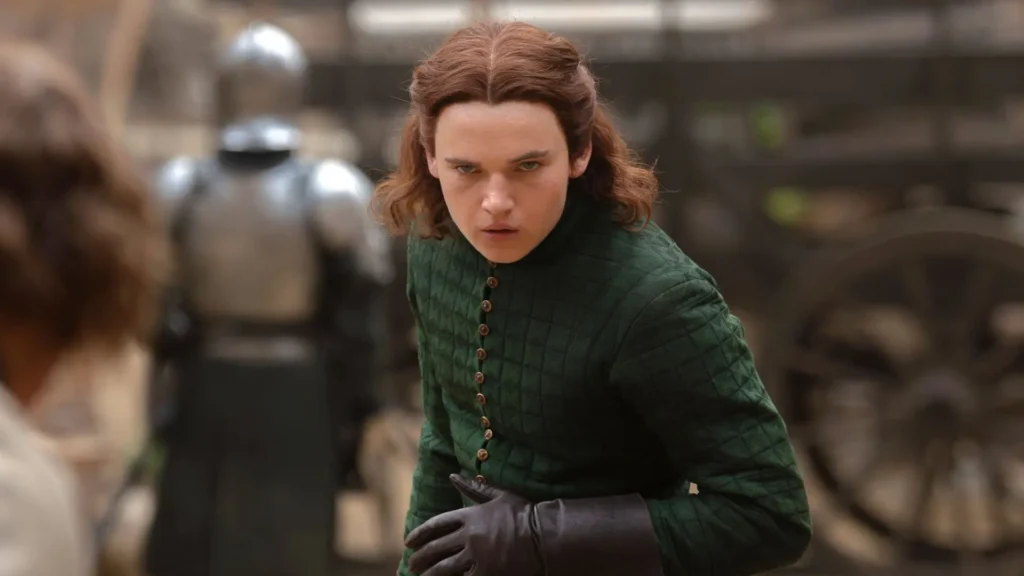
Technically Rhaenyra is in the best position at the end of the finale, as she still has the Iron Throne. But in reality, her situation is getting more precarious. Now the people of King’s Landing may have to join another uprising. Her dragonseed strategy has failed and she has fewer trusted allies. Daemon is still estranged from Mysaria due to political tensions and a lack of trust, and the existence of Aegon threatens the idea that her victory is a foregone conclusion. Rhaenyra has the crown; but she is also more and more isolated, inside the Red Keep, where she is surrounded by people she doesn’t know if she can trust.
The Greens are in a very special and complex situation. Their victory at Tumbleton has given them a lot of military momentum, but their leadership is still quite divided. Daeron, the commander of the army that has just survived one of the bloodiest battles of the war, has come to prominence, and Aemond is wounded and stranded at Harrenhal. Aegon II, for one, is still alive and has supporters waiting for the chance to put him back in power. This also puts the Greens in a precarious position, as winning the war will require them to move beyond their own infighting, rather than simply defeating Rhaenyra.
What the Season 3 Finale Means for Season 4
The biggest takeaway from the finale is that the Dance of the Dragons has reached a point where there are no more easy wins. Rhaenyra sits upon the throne, but the moral authority that once made her claim so compelling is slowly slipping away. The Greens are making progress, but still have a long way to go to be united. The people of King’s Landing are once again ready to rise up against the lords fighting over their heads, Daeron is turning into a mighty military power, and Aegon is still alive. It seems that every victory brings the Targaryens closer to their own destruction, as every move to secure the throne only makes things worse.
This means that Season 4 has a very different story from the one that started the series. The central question is not about who deserves the throne in Westeros — Rhaenyra or Aegon. The people in the middle have paid the highest price, with both sides having crossed lines that would have been unthinkable earlier in the war. The finale makes it clear that the Targaryens can still fight for the Iron Throne, but the war has already diminished the value of the throne. Now the consequences of Season 4’s events need to be dealt with, and if the finale is any indication, the end of the Dance will be as brutal as the war that preceded it.