
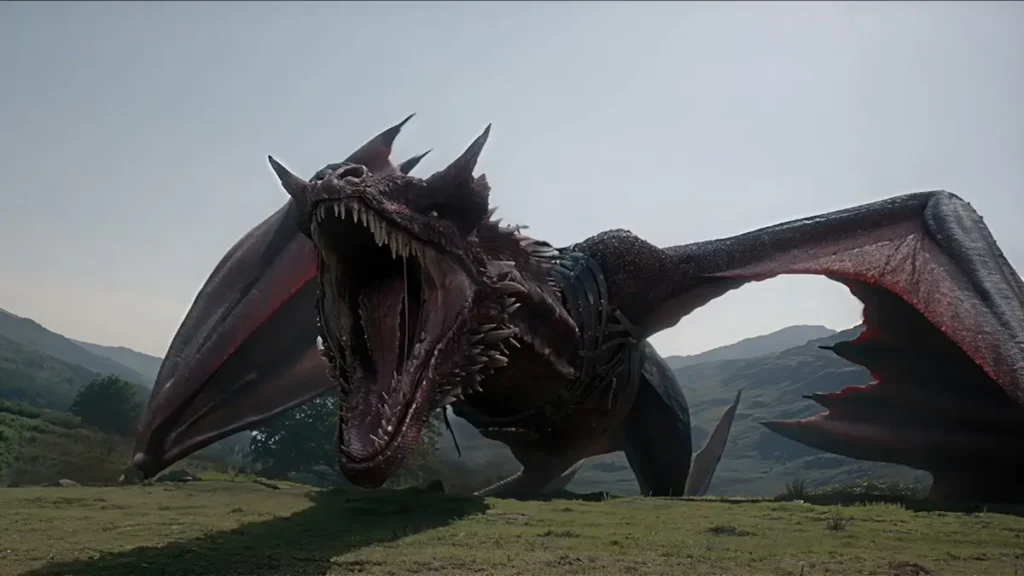
The dragons of Westeros were never meant to be mere special effects. Ever since Daenerys Targaryen’s three stone eggs made good on their promise in the original series, the winged beasts have been established as the very emblem of dynastic might. But with House of the Dragon now in its third season, one can see how a certain structural miscalculation in Game of Thrones has been laid bare by the way the two flagship shows part company in their treatment of such legendary creatures.
Both have put these massive mythical animals at the heart of a civil war, but the prequel has gone about it in a radically different way. The original series had a habit of making its scaled heavy-hitters an extension of the rider’s will, diminishing their psychological heft until some late-game convenience of the plot called for more. House of the Dragon takes the opposite gamble: it treats the beasts like actors.
The difference is hard to miss as the current season plays out. Take Caraxes: his jagged and aggressive nature is in step with Daemon Targaryen’s volatility, but he is no mere carbon copy of his master. Then there is Syrax and her particular affinity for Rhaenyra, or Vhagar, whose every appearance on the field feels like a calculated geopolitical event given the centuries of warfare she embodies.
You see this philosophy in the wild dragon Sheepstealer as well. Put down at a remove from Targaryen authority, he is a product of feral independence and isolation. When Rhaena goes about the business of taming him, it is an arduous affair that acknowledges the animal for what he is, not some glorified mode of transport.
In retrospect, Game of Thrones did not want for budget or technical skill; the failing was in the narrative. By subsuming the interiority of the dragons to the swift plot movements of their masters in the series’ chaotic final stretch, the adaptation let them become too easily steered, missing the chance to show them as untamable forces of nature.
House of the Dragon is methodical in its approach to the Dance of the Dragons, and in doing so makes the case that a fantasy of any worth must be as driven by the caprices of its beasts as the human houses vying below them.
There is a friction between control and chaos that has always defined the appeal of George R.R. Martin’s world. Game of Thrones saw fit to make of its dragons simple instruments of war. House of the Dragon gets it: the drama is in the fact that they are living, breathing wild cards with minds of their own.