
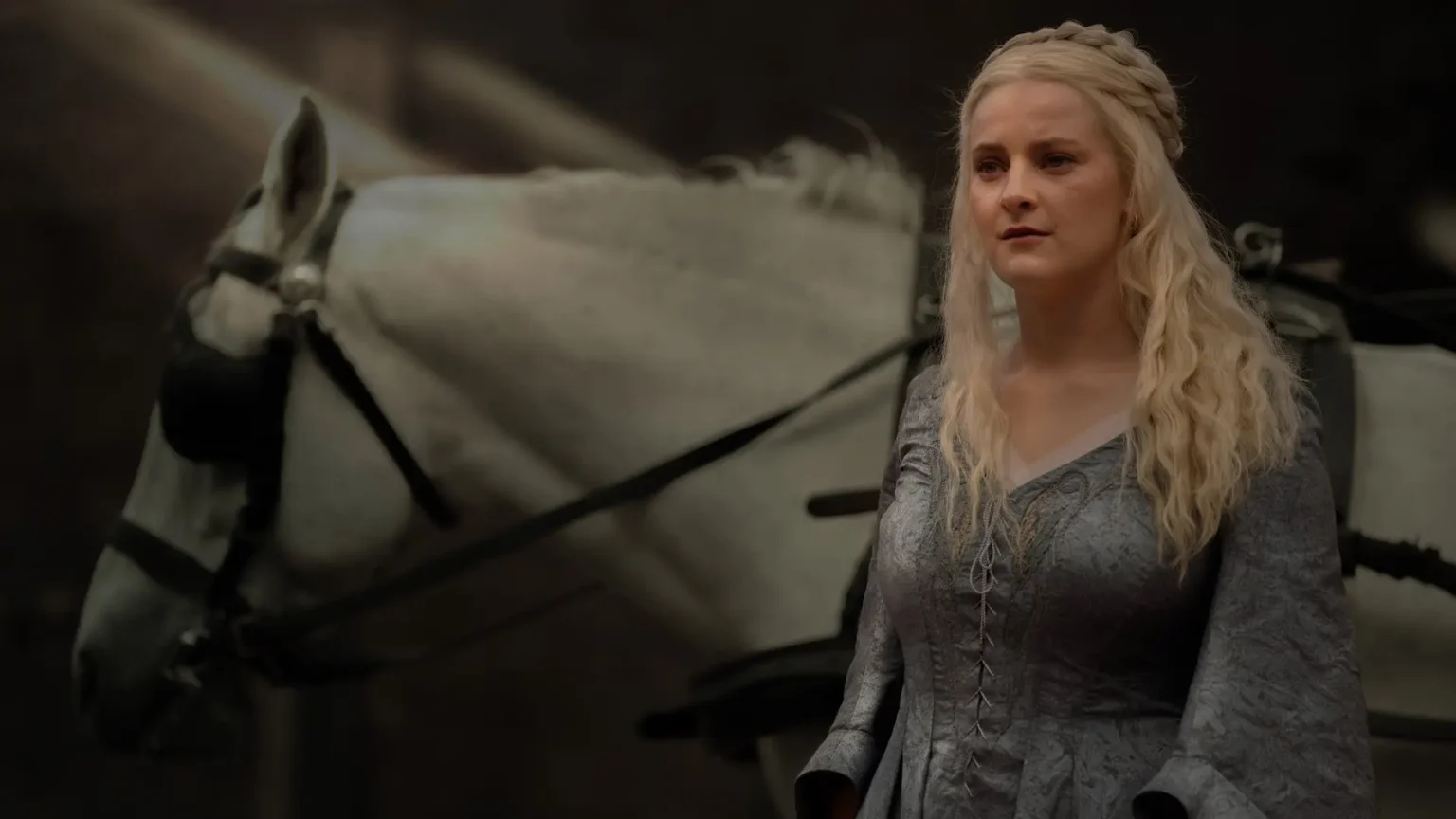
The approach the show has taken with Helaena Targaryen is one of the more consequential and talked about ways in which House of the Dragon has adapted George R.R. Martin’s Fire & Blood, and as Season 3 nears its end it is drawing intense scrutiny. The series has been unafraid to introduce changes in its adaptation, but keeping Helaena at a remove from her dragon Dreamfyre is perhaps the most notable. After what transpired in Episode 7, director Nina Lopez-Corrado broke down the thinking behind the matter.
How Helaena Differs from the Books
Helaena is a dragonrider in Martin’s telling, bonded to Dreamfyre and drawn into the Dance of the Dragons before some trauma drives a wedge between her and the animal. On screen she is something else; like her grandfather Viserys she will not ride, regarding dragons as a corrupting influence, living weapons that remake their masters.
Episode 7 brought that to the fore. In a dream of a prophetic nature Helaena is seen on Dreamfyre while the people of King’s Landing storm the Dragonpit by the hundreds; the scene is all the more arresting for the way it runs counter to her otherwise. Yet in the course of the episode she tells Rhaenyra that to ride Dreamfyre is “too much” and wonders if the dragons have already transformed their would-be controllers into something other than they were.
What the Director Sees
“Helaena is conflicted over the dragons because of the strong feelings she has for them, she thinks they have changed people, their whole world in effect,” Nina Lopez-Corrado told Entertainment Weekly. “When she envisions herself on the dragon and Dreamfyre laying waste to King’s Landing you can see a deep pain… As a Targaryen I think she knows at some level there is rarely going to be a good outcome to what is happening in this war of families. And so long as the dragons are here they will keep that kind of turmoil inside the Targaryens.”
In Lopez-Corrado’s words it is less a matter of passivity or fear than a deliberate moral stance. Helaena is aware of the destructive cycle at work in her family and will not contribute to it, even if her visions of things to come leave her with little option.
The Backlash from Fans
Book readers have been at odds with these deviations from Helaena’s story line. They were the subject of the “toxic butterflies” post by George R.R. Martin where he offered some criticism for Ryan Condal’s adaptation and laid out how minor alterations can have major repercussions. Prince Maelor, the youngest son of Helaena who is important to the events of Fire & Blood, was conspicuous by his absence at first.
For now the show seems to be correcting that omission; Helaena is pregnant and most would read that as Maelor arriving late, something Condal has said he was open to. But as we get to the final episode the concerns of Martin and his fans as to the narrative fallout are still very much in play. Whether the sum of the changes to Helaena and the rest of the story will be enough to placate the source material and the needs of the show remains to be seen. In her dream of the Dragonpit being stormed she is forced to ride the very dragon she has shunned; how the season deals with that could well be its defining moment.