
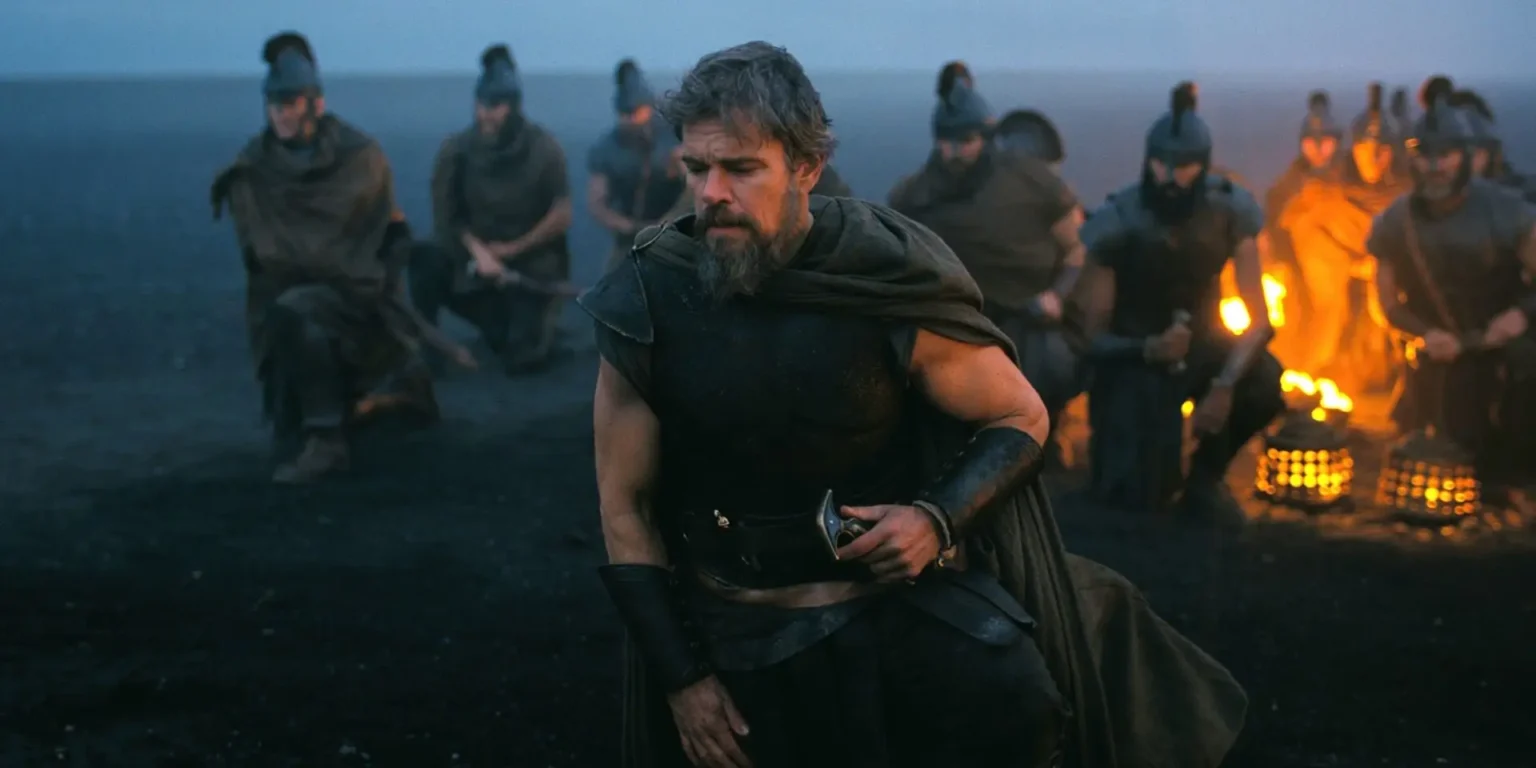
The final scenes of Christopher Nolan’s The Odyssey deliver a striking narrative pivot. Viewers won’t expect Matt Damon’s king, so worn by battle, to do what he does. Odysseus has no inclination to make a quiet return to his throne and the domestic order of Ithaca; instead he and Penelope set sail and head west into the sunset. It is a homecoming at odds with Homer’s, but then again it engages in a compelling dialogue with Dante Alighieri’s Divine Comedy, perhaps the best known work in Western literature.
Dante offers a starkly different vision of the Greek hero in Canto XXVI of the Inferno. In his telling, Odysseus rejects a tranquil existence; the pull of Penelope or his duties to his son Telemachus and old father Laertes are no match for an insatiable need to discover. He musters his crew, makes for the open ocean beyond the Pillars of Hercules and the confines of the world as it is known, all in pursuit of a fatal vision. “Consider your seed: ye were not made to live like brutes, but to follow virtue and knowledge,” is the mandate that immortalizes this quest.
Nolan adopts a Dantesque perspective when he reworks the myth for the screen, turning it into something of a meditation on penance and guilt and the curse of being ever curious. With Odysseus opting for self imposed exile over a crown, the film has one foot in Homeric tradition and the other in the realm of Dante’s tragic intellectual. The King of Ithaca is compelled to leave by more than any god’s hand; his role in the sacking of Troy and the wooden horse remains to be answered for. To sail west is to expiate and to court the unknown in the manner of a soul that has long preoccupied the likes of poets and philosophers.
The Burden of Intellect and the Tragedy of the Horizon
What stands out is the way Nolan calls on this literary past to shift the emphasis from a hero’s physical prowess to a reckoning of a psychological sort. As in Dante, Odysseus is undone by his own cleverness; the same faculties that brought down Troy make him ill at ease with the peace of a common monarch. For a man who has seen human destruction up close and knows where he stands in the demise of an age, to simply don the regalia of Ithaca would be an empty gesture. To go west is to accept that a thinker can never un-cross certain horizons.
In the end, this convergence between a medieval Italian poem and today’s blockbusters speaks to an anxiety as old as progress itself. Odysseus and Penelope are after something more than romance as they make their way into the dying light, they are going to where civilization ends. It is a fittingly beautiful and haunting note on which to conclude an epic, one that posits you do not find wisdom in the winning of wars or thrones but in confronting the hubris of the human condition and having the nerve to sail right off the map.