
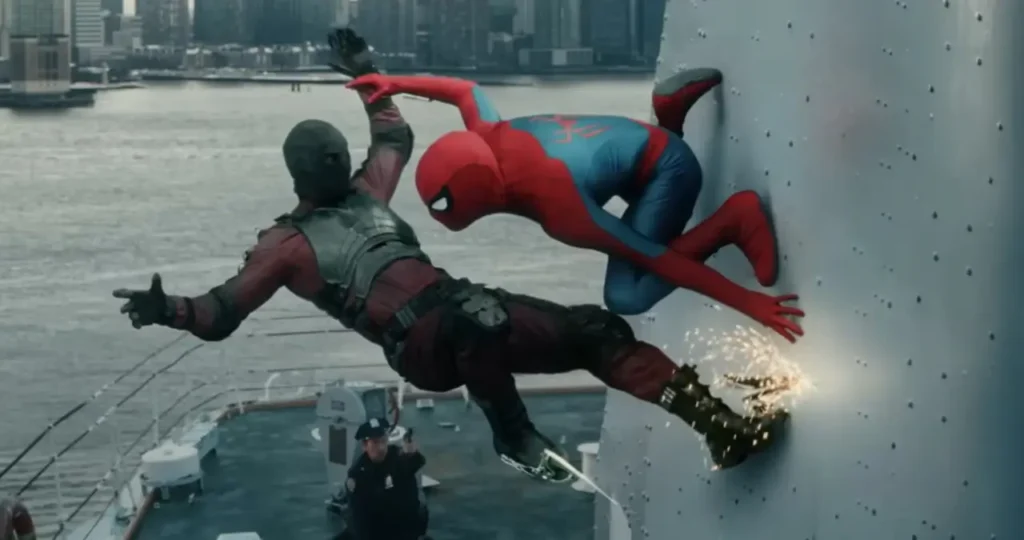
From the first trailer, Destin Daniel Cretton’s Spider-Man: Brand New Day has been making much of its cast of villains. There is Scorpion back in action, the Hand is involved and you can spot street-level troublemakers like Tombstone, Tarantula, Boomerang and Ramrod; on the surface it seems a tale of New York’s criminal element. But the film has a way of defying those expectations, withholding its chief antagonist for the final act to leave the viewer in suspense.
Warning: what follows includes major spoilers for Spider-Man: Brand New Day.
The Red Herring: Why Sadie Sink Is Not the Villain

The story goes to some lengths to make you believe the enigmatic young woman of Sadie Sink’s making is the main danger. She is ruthless enough, using her mind control and psychic gifts to put Spider-Man in a difficult position. In time though, the movie shows there is more to her than a simple villain.
Sink is playing Jean Grey, the formidable mutant who will be an X-Men fixture in the MCU. Jean is on a desperate trail for her older sister Sara, another telepath who was taken by Damage Control and put through some cruel experiments. Before she died, Sara left Jean with one telepathic word: “V-max.” For most of the film Jean takes this to mean some kind of hidden facility or weapon.
Then comes the moment of capture. Back in her holding room Jean sees a ventilation duct with a sticker that has been partially torn off to show “Ventmax,” or “V-max” for short. It is then she understands the terrible truth: Sara was not referring to a project but to the room where she was held and put to death. The discovery brings out all of Jean’s power and puts Peter Parker in an awkward position. He has been of help to Damage Control in their pursuit of her, but now he has to side with her.
His protection of Jean is made plain in the climax. When Frank Castle, the Punisher, puts a round at Jean from a distance, Spider-Man does not hesitate and puts himself in the line of fire, taking a serious wound. As the Punisher hurries Peter to the hospital, Jean calls on her abilities to see him through it. A selfless move that makes it clear any prior conflict aside, Jean Grey is no villain.
The Real Villain: William “Bill” Metzger of Damage Control
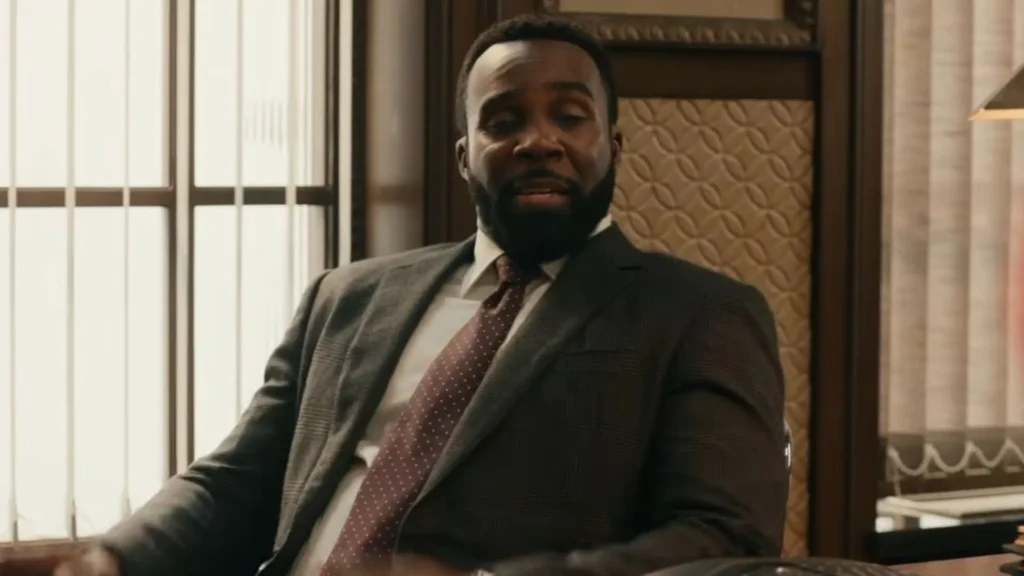
William “Bill” Metzger of Damage Control is the film’s principal villain. In the hands of Tramell Tillman, the character is a study in insidiousness. At first blush, Metzger is the picture of a pragmatic government man at the head of his department, all about shielding the city from whatever dangers may be lurking. He is not above using that position to manipulate Spider-Man, dole out just enough information to make Peter turn on Jean.
It is MJ who puts an end to his ruse with some keen observation. Metzger will have it that Jean spoke Sara’s name after reading it from her mind while she was possessed; yet MJ can recall nothing of what transpired under Jean’s influence. The discrepancy tells you that Metzger was already well aware of Sara, since Damage Control had made short work of her – they captured and experimented on her before putting her down. Now he has set his sights on Jean for the same treatment, seeing in her power something to be put to use as a weapon.
What makes him such an effective antagonist is that he has no superpowers to speak of. Instead, he turns bureaucracy and authority into weapons of fear and control. There is a lineage to this in the Marvel comics, where William Metzger is associated with anti-mutant propaganda and militias like The Militia Press or in X-Men: Children of the Atom. The MCU has given him a new coat of paint as the leader of Damage Control, but he remains a systemic menace to mutants, one who can look perfectly reasonable while perpetrating horrors in private.
Even as Yelena Belova starts to get at some redacted files from Damage Control in the closing scenes, Metzger manages to get away. It is an ending that leaves no doubt he could well be back, positioning him as a likely early adversary in the X-Men saga the MCU is building.
A Supporting Rogues Gallery

Metzger may be the one pulling strings from the shadows, but Spider-Man: Brand New Day is more than happy to put a host of secondary threats on screen to give its urban setting the kind of street-level feel it has in spades. Foremost is Mac Gargan, or Scorpion as he is better known. Since his debut in Homecoming, the character has been given a part that hews much closer to the original comics. Yet for all the physical peril he presents to Peter, he is no mastermind; Jean Grey sees to that, using her mind to make him an instrument of her will.
Then there is the Hand. The ninja outfit that made its mark on Marvel’s Netflix Daredevil and Defenders shows up here in force, this time acting as Damage Control’s security detail. They come to blows with Spider-Man in some of the film’s key moments when he is making for Jean, and the way the fight is staged is nothing short of intense. They are well-coordinated, if ultimately at the mercy of the larger scheme.
To complete the picture, you have the likes of Tombstone, Tarantula, Boomerang and Ramrod. Whether their turn in the spotlight is fleeting or not, these old faces from the rogues gallery do what they should: they add texture to New York’s criminal element and a sense of familiarity for the faithful. It is a gritty affair, not the sort of cosmic confrontation you might expect, and it does not get in the way of the story’s emotional core.
In the end, Brand New Day is not about empty spectacle. By having a cold bureaucrat serve as the villain of the piece over some showy super-powered type, the film makes for a more considered narrative. It is a layered approach that allows for some good action while also getting at the harder questions of prejudice and moral ambiguity. What the marketing led us to expect is deftly subverted in favour of something more nuanced that opens the door for the MCU’s mutant era.