
The modern television landscape is now defined by the neo-western, an era of high-stakes corporate maneuvering and the kind of sprawling family empires that dominate the screen. Taylor Sheridan has been the driving force behind this genre’s commercial renaissance; with Yellowstone and its spinoffs at the helm of his own considerable empire, he has put millions of viewers in the palm of his hand with stories of ranch politics and rugged individualism under the big sky.
But ask a critic or a purist where the true artistic heights of the medium are to be found and they will likely have a different answer altogether. There was a time before streaming services were awash in multi-season epic ranch dramas when Netflix put out something of a compact, uncompromising work: Scott Frank’s 2017 limited series Godless. It remains a masterpiece that puts the flashier offerings of today to shame.
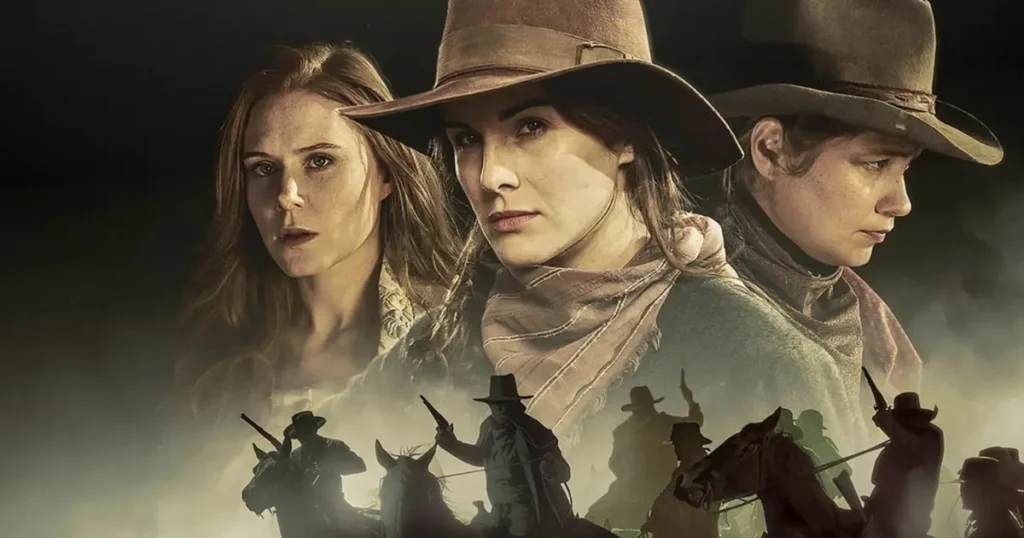
In seven carefully constructed episodes, the show eschews the helicopter views of Montana and the tawdry twists of a soap opera for a more visceral, old-school tragedy. Godless doesn’t bother with corporate rivalries. Instead it takes you back to 1884 and the desolate mining town of La Belle in New Mexico, an isolated place made up of little but women following a subterranean disaster that left the men of the community dead.
Pacing and the Old Ways of Craft
There is a quality to Godless that puts it in a different league from the usual fare you find on streaming services. It has no time for the algorithmic dictates that so much of modern television is beholden to. Where other shows will pad out their story with filler over countless seasons in an effort to keep viewers watching, Scott Frank’s miniseries does not make such concessions; the runtime is handled with an uncompromising sense of artistic integrity.
The episodes run anywhere from 40 to 80 minutes as they see fit, which gives the scenes room to breathe. You’re left to the mercy of the atmosphere and the characters rather than some arbitrary quota. It allows the series to make a slow-burn descent into the blood, dust and moral gray areas of the old West. There are no cheap digital tricks here. The filmmaking is practical and tactile, with a reliance on sweeping landscapes and a kind of historical grit that seems hard won.
Godless is driven by what can only be called a masterful job of casting. You have Jack O’Connell as Roy Goode, a troubled outlaw who seems to be putting on a raw display of vulnerability in his bid to put some distance between himself and his history. He is matched by Jeff Daniels in the role of Frank Griffin. Daniels is simply chilling in this part, crafting an antagonist of hypnotic proportions whose monologues are as cold-blooded as they are steeped in a warped form of biblical fatalism.
They are well supported by Michelle Dockery, who is all resilient widow with a gun in hand as Alice Fletcher, and Scoot McNairy playing a half-blind sheriff too weary for the lawlessness he is tasked with containing. Yellowstone may have its moments of high drama for the modern western, but Godless is a self-contained piece of art. It is a pristine example of what is possible when the genre is approached with the seriousness of cinema and not merely as a means to build a franchise.