
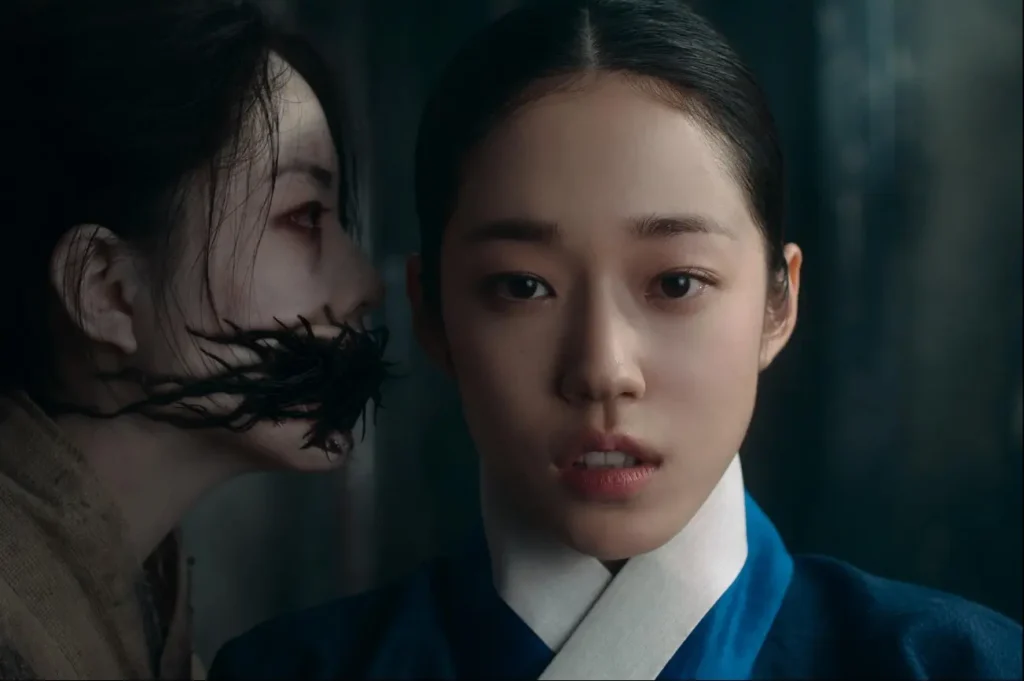
There is no mistaking Netflix’s hold on the high end of international content, and its strategy keeps producing breakout material. South Korean television in particular has an unyielding command of global viewership charts. Case in point is The East Palace, an atmospheric dark-fantasy that has made quick work of climbing to the top tier of international streaming. In just three days since its debut, the show has seized the global zeitgeist despite having no legacy franchise to prop it up.
The eight-episode series is a deft blend of action folklore, historical drama, and the supernatural. It takes place in a reimagining of the Joseon era where the royal court is under siege from a dark, ancient curse and malevolent spirits. Gu-cheon (Nam Joo-hyuk) is the story’s focal point; as an elite spirit hunter he can cross the fine line between life and death. He is called in by the crown to put an end to the palace’s growing problems and is put to work with Saeng-gang (Roh Yoon-seo), a court lady of some resourcefulness who can talk to ghosts. Their probe into the goings-on in the eastern wing of the palace brings to light political vendettas and entities dangerous enough to imperil the kingdom and the crown prince (Kwak Dong-yeon).
A Critical Darling Built on Practical Craft and Mythology
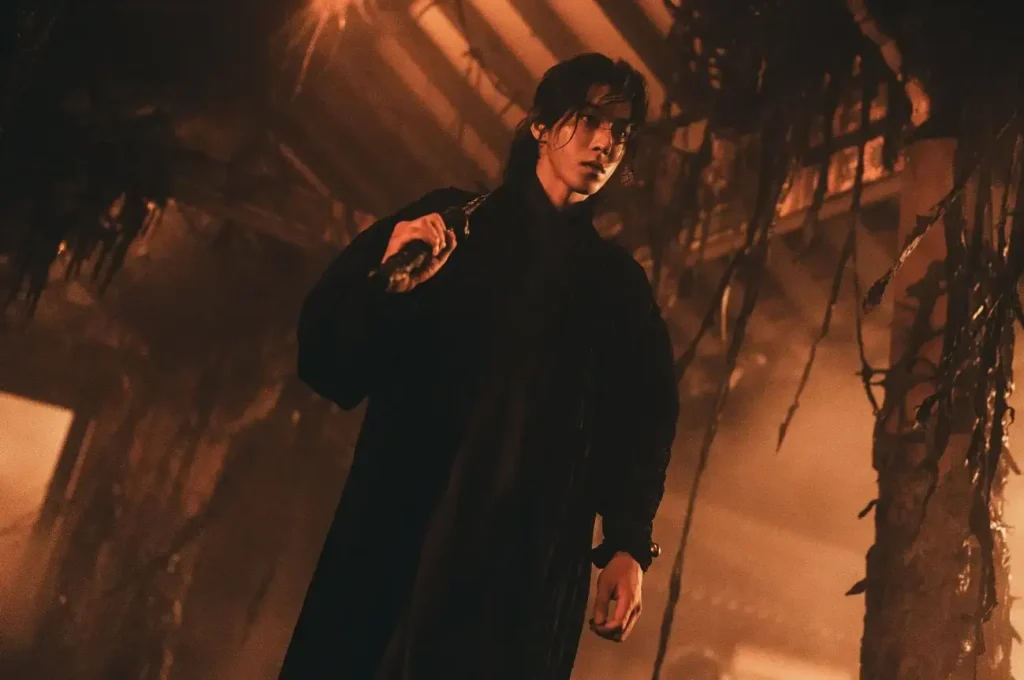
Under the direction of Choi Jung-kyu and the pen of Kwon So-ra and Seo Jae-won, the production sets itself apart. Instead of the kind of homogenized western fantasy tropes one might expect, The East Palace draws its horror-fantasy elements from the well of authentic Korean lore, giving the historical setting a real sense of dread. Critics have been lauding the world-building and creature design, not to mention the cinematography. Rotten Tomatoes bears this out with a 100% score from reviewers and a solid 90% from audiences, the latter fueled by word of mouth over the show’s cultural specificity and narrative drive.
Decoding the Global Viewership Numbers
Commercially, the numbers are in keeping with the praise. The East Palace has proven to be a hit with subscribers, racking up some 4.9 million views in its first 72 hours for a total of 32.9 million hours watched. That is enough to put it at number two on Netflix’s non-English TV charts in its opening window. Such figures for an original property in a summer as crowded as this one suggest a change in how audiences consume content; there is a readiness to engage with something more sophisticated than what an algorithm would typically serve up. For now it stands as an eight-part miniseries with no word on a follow-up, but given the velocity of its start, one can imagine an expanded arc for The East Palace as it holds its place in the global top ten.