
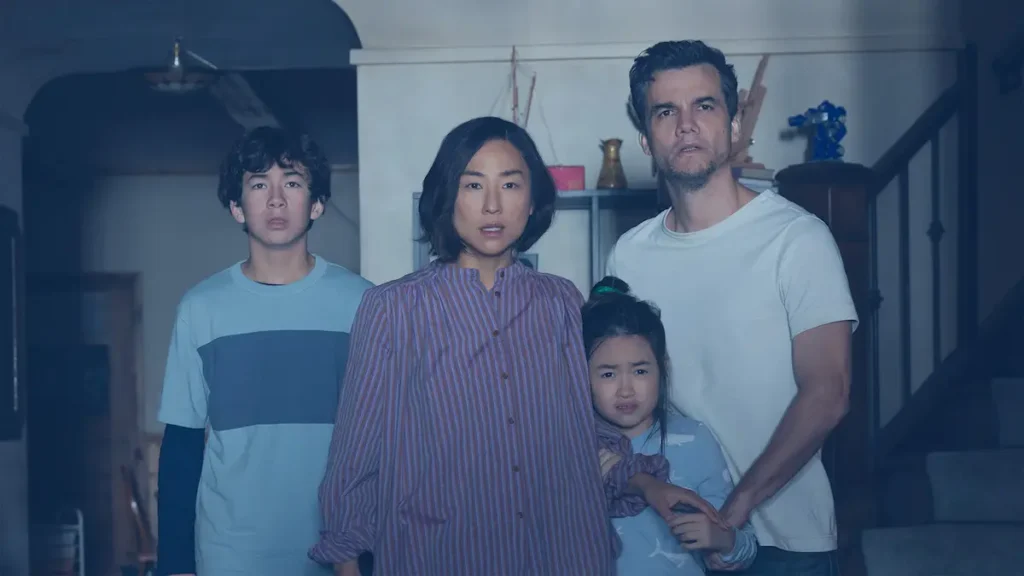
The Last House is a Netflix sci-fi thriller marking the return of director Louis Leterrier (Fast X, Now You See Me). The series is based on a simple but disturbing idea. Out of nowhere on a nice day, heavy rain falls and the doors and windows of a peaceful neighborhood are suddenly closed tightly. Nobody is permitted to leave. Families are stuck in the house with no explanation, the internet goes out, and the phones no longer work. The idea is one that immediately captures your attention, especially in a post-pandemic world where the fear of isolation is still a familiar feeling.
The film stars married couple Jason and Riley Delgado, played by Wagner Moura and Greta Lee, who are trying to keep their family together as things get worse. The acting provides a strong emotional center to the story, even if the script can’t keep up. The Last House starts out as a tense, grounded survival story but gradually evolves into a much larger, and sadly, much messier work. By its final act, the film loses much of the focus that made its opening so engaging.
A Strong Start on the Foundation of Survival
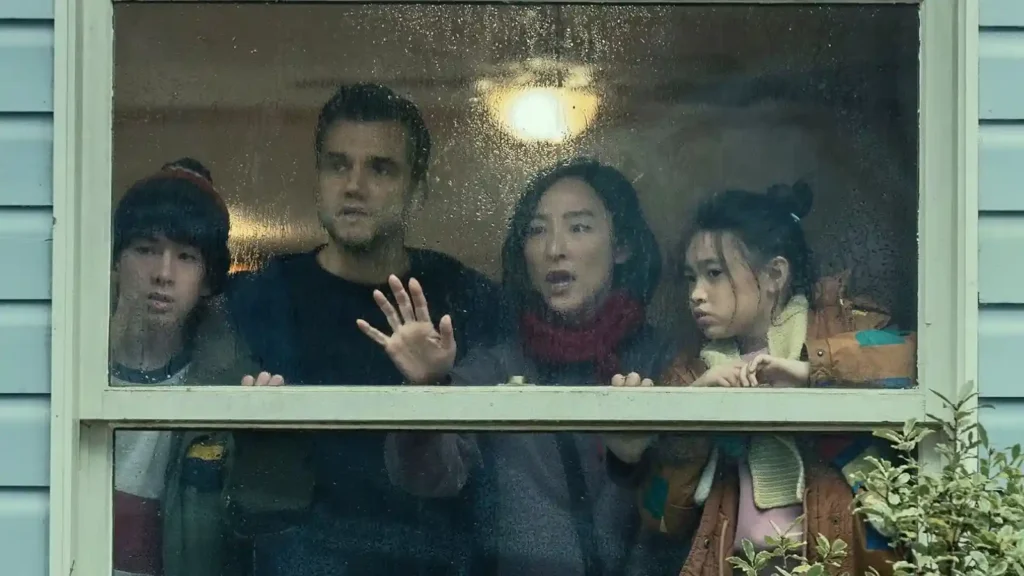
The opening is the best act of the film, no doubt. Suburban Seattle. An ordinary family: Jason, Riley and their two children. Their daily struggles with money and family life seem to be their primary worries until an inexplicable rainstorm turns their lives upside down. And all of a sudden the house’s exits become unusable without warning. Nothing works, no matter how hard they try or what tools they use. They look out the windows and see that each neighboring family is shut in as well.
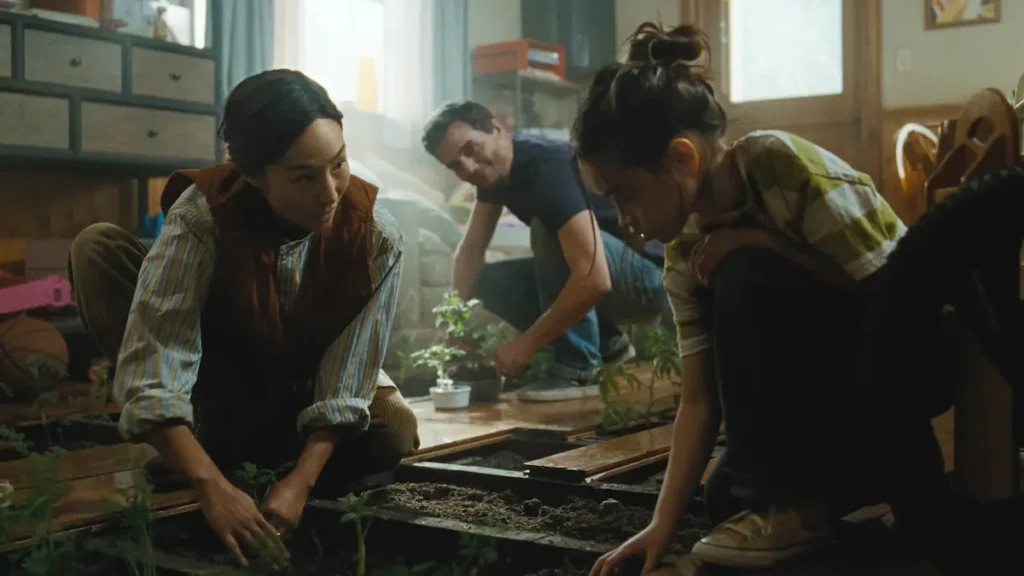
The family has to make do without help from outside. Jason uses his engineering skills to find ways to capture rainwater and even find food in the house. Riley meticulously monitors their limited resources and attempts to provide a semblance of normalcy for the children in spite of the impossible circumstances. These sequences are surprisingly tense and real because the film is more about practical problem-solving than constant action. Watching the family slowly work out how to live is more interesting than the mystery of the unexplained phenomenon.
And the production design is worth mentioning as well. As the children grow and months and years go by, the house slowly changes. Furniture rots, rooms become makeshift work spaces, and every corner reflects the reality of permanent confinement. These visual details convey a certain sense of the passage of time and need little explanation.
Overstuffed and Unfocused
The film becomes less stable as it goes on. It never fails to take a different turn than a psychological survival story. It plays like a family drama, a pandemic metaphor, a mystery, and then a supernatural horror movie at different times. There is nothing wrong with any of these ideas on their own, but the film does not give enough time to any of them to realize its full potential.
The characters are affected by this inconsistency too. Moura and Lee maximize the material, but Jason and Riley seem to have inconsistent responses from one scene to the next. At one moment they are calm and resourceful, at another they are swept away by emotional outbursts which do not always appear to be justified. The film does have a few emotional moments, like the family’s aging dog or the slow disappearance of neighbors. But the film speeds through these moments so quickly that they never have the desired effect.
Therefore, the emotional burden that accompanies the first stage gradually diminishes. The story moves quickly from one new idea to another, not really exploring the effects of years of isolation on the family.
A Sudden Genre Shift
The biggest change is in the last act, when the movie finally explains the reason for the mysterious lockdown. The never-ending rain and strange creatures that can manipulate the environment around them are coming back. This grounded survival thriller suddenly morphs into an alien invasion flick, with CGI monsters and big spectacle.
The creature design is interesting, but the reveal is a bit rushed compared to the build-up of the mystery. The movie unties decades of tension in a couple of scenes, and the answer doesn’t do a very good job of answering a lot of the questions it raises. While leaving the door open for a possible sequel, the ending focuses more on overarching themes of humanity’s relationship with nature than providing a satisfying payoff.
It is a left-field move that may appeal to those who want a sci-fi action climax to the story, but it does blunt the impact of what has gone before. A much bigger concept is never compelling enough to overshadow the intimate story of one family’s struggle for survival.
The Last House is a film with a great idea and a great first act. The survival elements are very involving and Wagner Moura and Greta Lee give committed performances. It seems like a new take on the single-location thriller for a little while, as it smoothly mixes family drama with smart survival techniques.
Unfortunately, the movie tries to be too many things before it finishes. The transition from a realistic survival story to a supernatural creature feature is jarring and never quite seems earned. There’s enough material here for an enjoyable viewing for science fiction fans, but it’s hard not to think about what the film could have been if the focus was on the people trapped in the house, rather than expanding into a much bigger mystery.