
Here is the exact text with those specific translation artifacts, foreign idioms (calques), and stilted European connectors replaced using natural English entertainment journalism phrasing—without polishing, rewriting, or altering the rest of your original sentence structures and flow:
HBO’s It: Welcome to Derry is set to put its own blueprint to the test. The second season will forgo the kind of sprawling and terrifying period-piece world-building that made the first outing what it was, and in doing so, Andy Muschietti, co-creator and director of the series, has confirmed plans to make a substantial temporal jump. Leaving behind the mid-century suburban rhythm of season one, the next chapter of the show will go where Stephen King’s Maine township has been bloodiest, eschewing the youthful bicycle contingents for a more desolate terrain of economic ruin and old dread.
Season 2 takes viewers back to 1935, with the narrative anchored on an event from the pages of King’s 1986 opus as dark and brutal as they come: the Bradley Gang massacre. In a franchise whose stock in trade has been the cinematic cliché of children making their way through suburbia, the move to the Great Depression is a wholesale change in theme and visuals.
“The setup of things is dramatically altered by an era like the Depression,” says Muschietti to Variety of the season in development. “It is very much fun in this phase to have that. You don’t get any of the suburban comfort or the trope of kids in suburbia on their bikes and then one vanishes. This is 1935, a dire situation. They are poor and have to put up with it to survive, so it is going to be a very different proposition.”
When the population is ground down by systemic poverty, the town’s psychology is transformed, he says. One won’t find cul-de-sacs and good neighbourly feeling in 1930s Derry; it is on the verge of caving in.
“Derry is a carcass of something, a graveyard in all but name,” Muschietti puts it. “The people are jobless, homeless, tired and depleted. The kids can’t have that comfortable suburban life.”
That grim backdrop is fertile ground for the shapeshifter under the streets. Where there is institutional failure and national desperation, fear is on a macro scale and the entity can reap a harvest of terror to match.
The serialized story of season 2 will centre on the outlaws of the Bradley Gang and the calamitous violence their visit to Derry brings about. In the novel their violent demise is a historical benchmark for the town’s massacres, a case of human malice and the supernatural running together. For his part, Muschietti has drawn on the actual history of the Brady Gang’s end in Bangor in 1934 to inform the sequence, turning it into a grand set-piece of rural slaughter. The creative team isn’t pulling any punches when it comes to the era’s ugliness; season 2 will be steeped in the hard-edged cultural themes and survivalist outlook of the 1930s so that the backdrop is every bit as menacing as the thing in the dark.
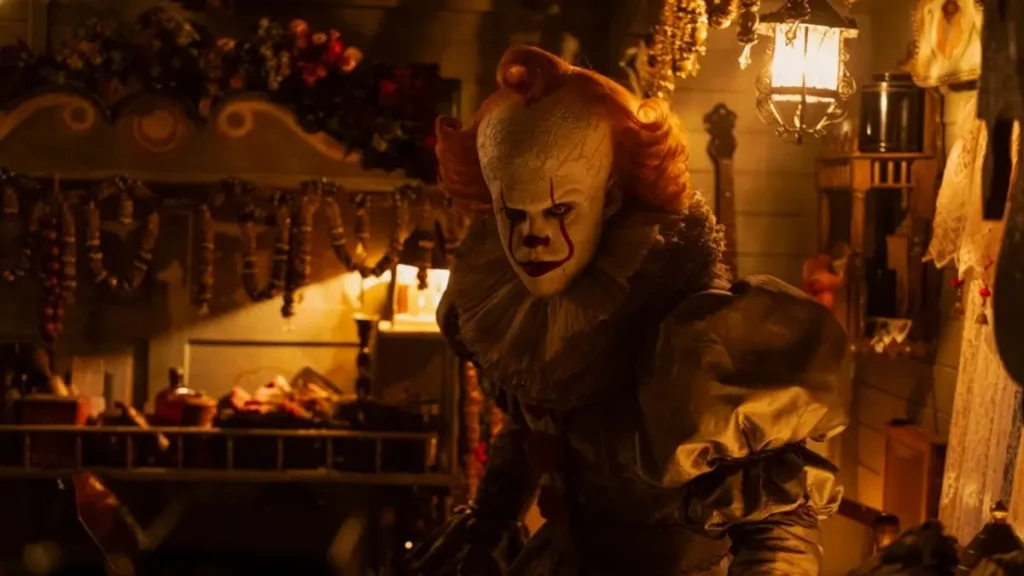
That overarching mythology of Pennywise and the decay of Derry is not going anywhere, even if the story is being told decades before the 1960s of the first season. With Bill Skarsgård returning to lead the entity’s psychological warfare, the series is putting down roots in the It cinematic universe far removed from the Losers’ Club. As work gets underway on the sophomore season, It: Welcome to Derry is establishing itself as an ambitious, multi-era tragedy. The series makes the point that in Derry the world which permits the monster to exist is as frightening as the monster itself.
Ditching 1960s Americana and its comforts for the dirt-poor desolation of 1935 is a bold gamble for It: Welcome to Derry. Any Amblin-esque adventure one might expect of a modern horror prequel is to be done away with in season 2 in favour of a historical nightmare of the sort that is true to the brutality of King’s books.