
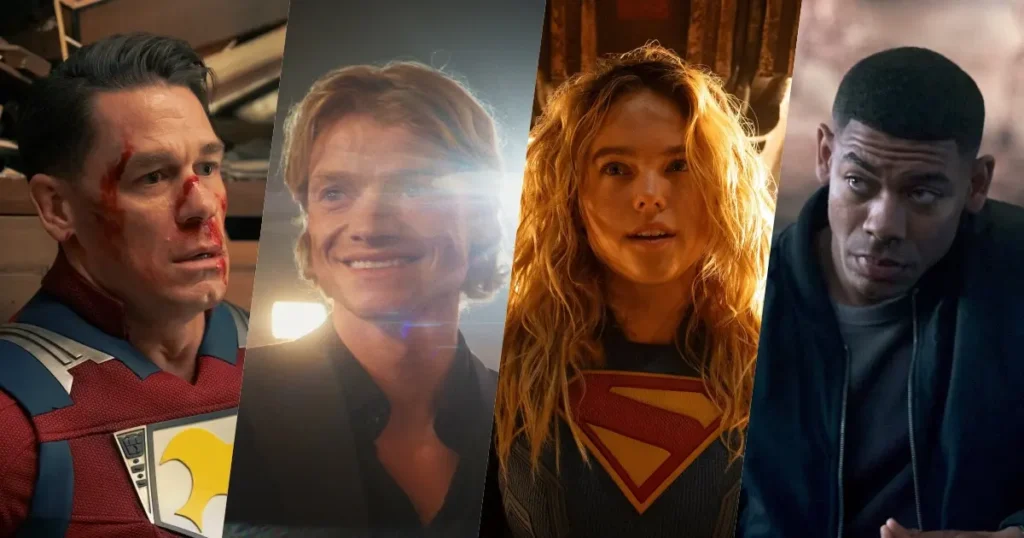
When James Gunn and Peter Safran revealed the first slate of projects for the new DC Universe, there was plenty of buzz around the obvious headliners like Superman. But the stranger picks were some of the biggest conversations. Booster Gold was pretty high on that list, a book about one of DC’s most entertaining oddballs. A time traveling hero with an eye on fame, as well as saving the day.
The project now seems to have run into a serious obstacle.
DC Studios has yet to officially cancel Booster Gold, but recent comments from writer David Jenkins indicate that the version he was working on is no longer moving forward. Jenkins, who was an interesting choice for the project given his work on Our Flag Means Death, took to social media to address the situation and make it clear that his take on the series is not happening. He even likened the experience to Mahershala Ali’s long-delayed Blade reboot, which is hardly confidence-inspiring.
The update comes as a bit of a surprise. Earlier this year, James Gunn said “Booster Gold” was still in the pipeline even as other announced projects quietly dropped off the slate. It’s not clear whether that means the series is being retooled behind the scenes, or simply rebooted with a new creative team.
If Jenkins’ version is really dead, it’s hard not to wonder what could have been.
Booster Gold has never been like most superheroes. Michael Jon Carter does not run on tragedy or destiny. He is a washed-up 25th century football star who has traveled back in time and used futuristic technology to masquerade as a superhero, in the hope that all of the attention will make him a star. It’s a funny-on-its-face premise, but it’s also pretty flexible. Under the comedy is a character who is always seeking validation, which makes him deeper than first time readers usually expect.
That seemed to make the project a natural fit for TV.
Many comic book characters are designed to have world-ending stakes, but Booster is at his best when the stories are funny and feature real character development. His adventures can be ridiculous one minute and suddenly heartfelt the next. There was every reason to think the series would lean into that balance under Jenkins, rather than just be another superhero show with a lot of special effects.
Now, this is far from the first comic book project to have a tough time getting from announcement to production.
The studios tend to announce grandiose slate plans years before cameras start rolling, and those plans inevitably change. Writers come and writers go. The scripts have been reworked. Budgets change. Whole strategies change as executives decide what fits the franchise’s larger direction. That’s true at Marvel, and it’s proving to be just as true for DC.
The problem for DC Studios is that expectations were set so high early on. Gunn and Safran presented an ambitious slate that included big movies and TV projects centered on less-known characters. That got people excited because it meant the new DCU wasn’t going to be just about Batman and Superman. At the same time it also created expectations that every announced title would eventually make it to screen.
Reality is not often that simple.
Creative development is messy, particularly in a shared universe still trying to determine its identity. Sometimes projects die because they aren’t working creatively. Sometimes it’s just a matter of their priorities changing. We can’t know exactly where Booster Gold falls on that spectrum until DC Studios tells us otherwise.
Still, it’s disappointing uncertainty because Booster Gold is the kind of character who can make a superhero universe feel less predictable. He’s funny without being a joke, flawed without turning cynical and self-serving in ways that eventually make him grow. That’s not the kind of protagonist you see every day.
Whether it’s Booster Gold back in some other form or another project that never quite got off the ground, it’s a reminder that early announcements are just that. Regarding franchise filmmaking today, a project isn’t really real until the cameras are rolling. Until then, the most promising ideas can evolve – or vanish altogether.