
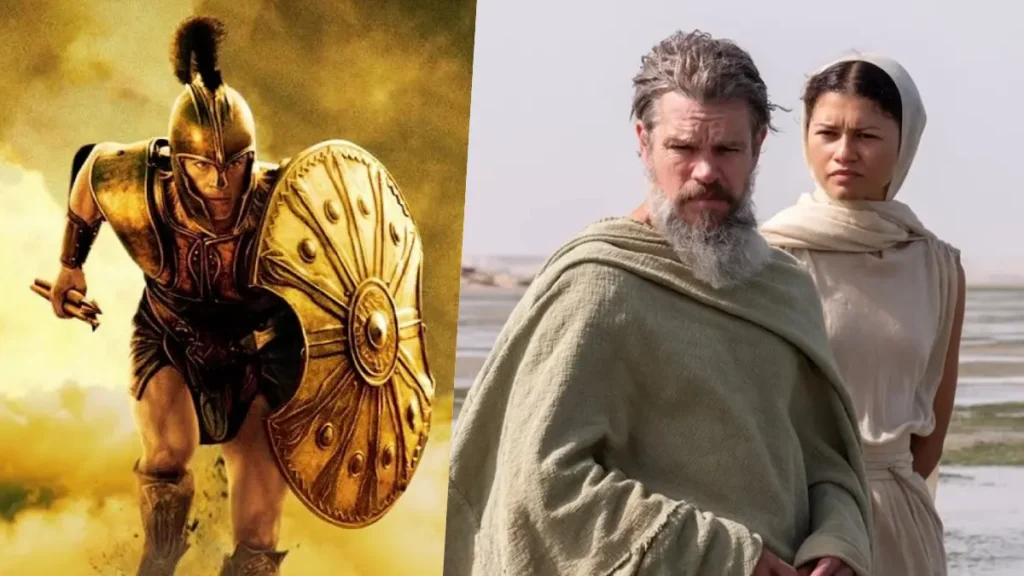
There has been no shortage of head-butting between cinephiles and classicists in the wake of Christopher Nolan’s The Odyssey. From social media to the more insular film forums, the conversation has come down to one thing: what is the film’s true fidelity to Homer? It is an easy question to ask, but a harder one to answer.
Nolan has made no secret of his approach to this kind of material; his adaptation of the epic is as much a re-imagining as it is a retelling. He has put a fine point on certain episodes, let the Greek gods step back from the action, and put a modern, trauma-focused spin on the story. Some will see that as a departure. And sure, it has set off the usual round of online noise about casting and style, with people eager to have their say on “historical accuracy.”
But to make of historical accuracy a central issue when talking about Homeric verse is to miss the point entirely. The Iliad and the Odyssey are not some kind of ancient record-keeping or a field guide for soldiers. They are epics that were told and re-told, steeped in myth, prophecy, and the kind of superhuman doings that don’t fit neatly into a timeline.
What matters is whether a movie gets at the heart of the poetry. On that front, it is hard not to be reminded of Wolfgang Petersen’s 2004 Troy.
Petersen put together a star-studded cast—Brad Pitt, Eric Bana, Orlando Bloom—and sold the film as a no-nonsense, realistic take on the Trojan War. The pantheon was left out of it. No divine hand-wringing, just men, armies, and the kind of raw ego and power politics you can put your finger on. In some ways, that was the appeal. But if you look at it now, after all this time, there is a certain irony to it: in its quest for verisimilitude, Troy often strays further from the Homeric feel than Nolan does.
Troy and the Realism Problem
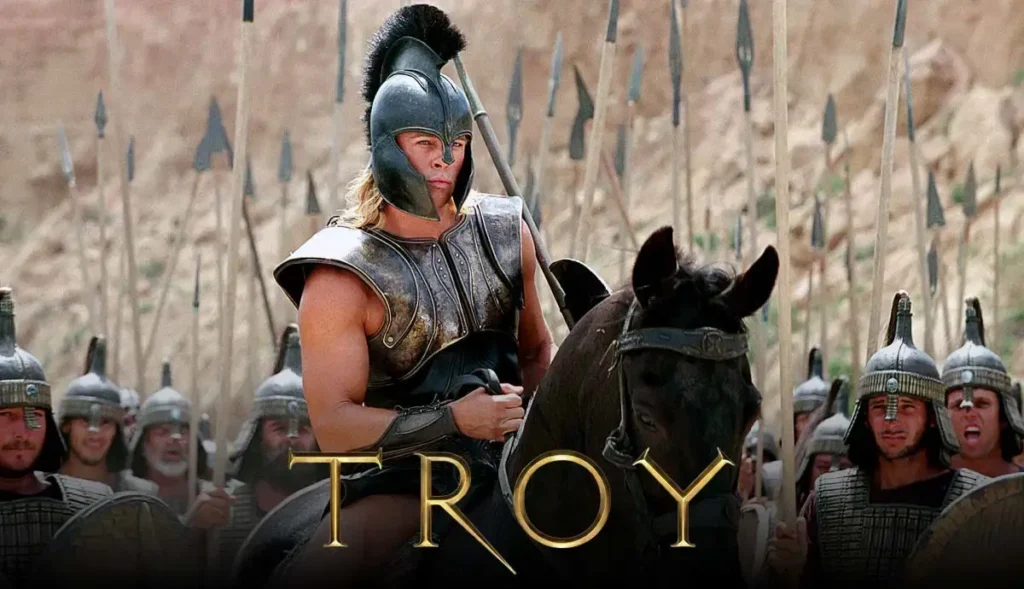
You will hear some laud the way Petersen did away with the gods as a mark of good, grounded writing. It is, however, a change to the very physics of the tale. In the Iliad, the deities are not set dressing. They are the embodiment of human feeling and the capriciousness of fate. Without them, the war in Troy becomes a matter of strategy and pride.
Then there is the matter of the source itself. The Iliad is, above all, a story of Achilles’ anger. A two-hour film has to cover more ground, so Petersen’s version runs the whole gamut, from the taking of Helen to the wooden horse. That means making some bold moves with the characters.
Take Menelaus. In Homer, he makes it home to Sparta with Helen. In the 2004 movie, he is put to the sword by Hector while Paris stands by. It is a convenient way to tie up a loose end for the audience, but it is a break with the kind of mythological order that gives the post-war world its shape.
Hector, too, is made into the moral compass of the piece, a well-rounded family man. The heroes in the original are a lot rougher around the edges, with a bloodlust and a sense of honor that doesn’t always read well in a modern context. Troy may have had the trappings of a period piece, but in the end, it put a Hollywood face on a story that is better left unvarnished.
What Nolan Does
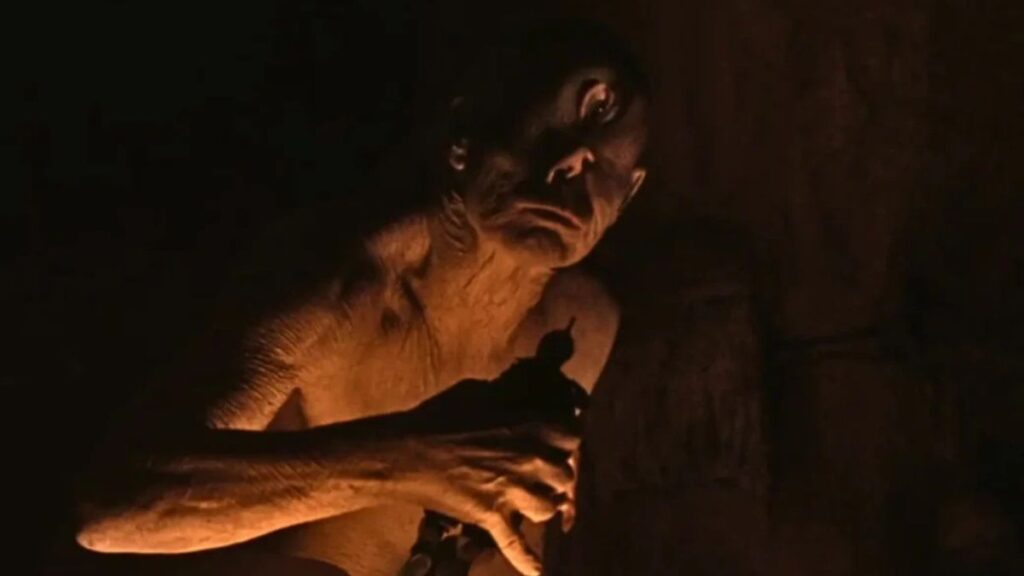
Nolan, for his part, is not shy about the odd and the symbolic in The Odyssey. He will have Odysseus run into Sinon in the underworld rather than the ghost of Achilles, or put his own spin on the lotus-eaters. But he seems to grasp that the Odyssey is as much an internal trip as it is a physical one.
In this telling, the homecoming is no simple victory for a king. It is a penance. Odysseus has to make amends for the lives he has cost and the hubris he has shown. The film may cut to the chase in places, but it leaves the essential fact of the epic in place: the man who is a legend is also a man in ruins.
Adapting the Classics
This is where the rub is with any film that tries to put literature on screen. Troy wanted to make of Homer a historian, to smooth over the divine and the morally gray in favor of a tidy action picture. In so doing, it lost some of the tragic force of the original.
Nolan’s The Odyssey, with all its interpretive choices, has a better handle on the job. A myth is not a history lesson to be corrected. Whether one is on Circe’s island or under the eye of the gods, these stories endure because they are about the kind of things that don’t go out of style: trauma, the overreach of pride, and the struggle of a mortal against the odds. You don’t bring Homer up to date by making him plausible. You do it by letting the weight of the poetry be felt.