
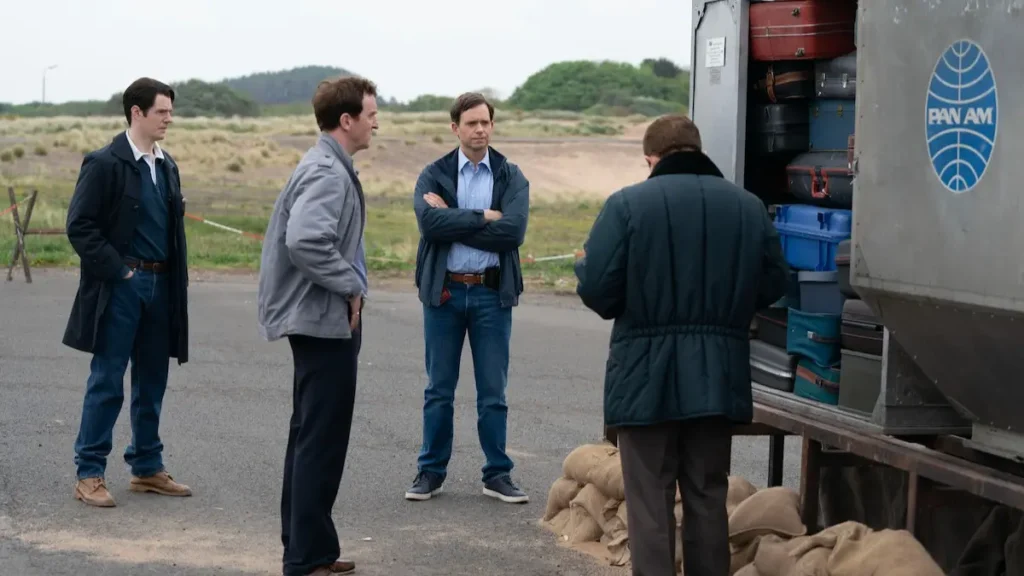
Some stories can be impactful without the need for more dramatic elements or elaborate plot twists. The Bombing of Pan Am 103 understands this from the beginning. The six-part Netflix limited series has no interest in making a conventional thriller out of a real-life tragedy, or turning the Lockerbie disaster into spectacle. Instead it focuses on what happened after the event, the investigation, the grief and the ordinary people who found themselves caught up in one of the most devastating terrorist attacks in British history.
The opening moments of the series are strikingly low-key. A family prepares for Christmas. Passengers board Pan Am Flight 103. In Lockerbie, life goes on as normal. The scenes are quietly unsettling because you know what’s coming and the show doesn’t linger on destruction as the plane explodes over the Scottish town. Instead, it’s about what happened after the event. Around the globe, families look for answers as investigators start the daunting task of piecing together evidence and residents walk through fields littered with wreckage. That decision sets the tone for all the subsequent events.
A Worthy Slow Investigation to Follow

If you want a fast-paced crime drama, you should probably look elsewhere. The investigation into the Pan Am 103 bombing progresses at a deliberate pace – which means that even the smallest discoveries often help to move things along. A broken part of a radio, clothing labels that can be traced to a shop in Malta, luggage records that suddenly take on a new meaning – all these clues help push the investigation forward, bit by bit. It may not be the most exciting thing in the traditional sense, but it does give a good idea of just how much patience and persistence is needed to solve a case that crosses many countries.
One of the best performances in the series is that of Connor Swindells as Detective Sergeant Ed McCusker. He never makes his character into a TV detective who has all the answers. Instead he is presented as a person attempting to do a very hard job, all the while dealing with the emotional cost of the daily events he observes. Peter Mullan has a similar kind of muted authority as John Orr and Patrick J. Adams is convincing as FBI agent Dick Marquise, especially when the differences between American and Scottish modes of investigation are revealed. The series maintains a grounded tone by never exaggerating the disagreements for the sake of drama.
The People of Lockerbie Leave the Deepest Impression
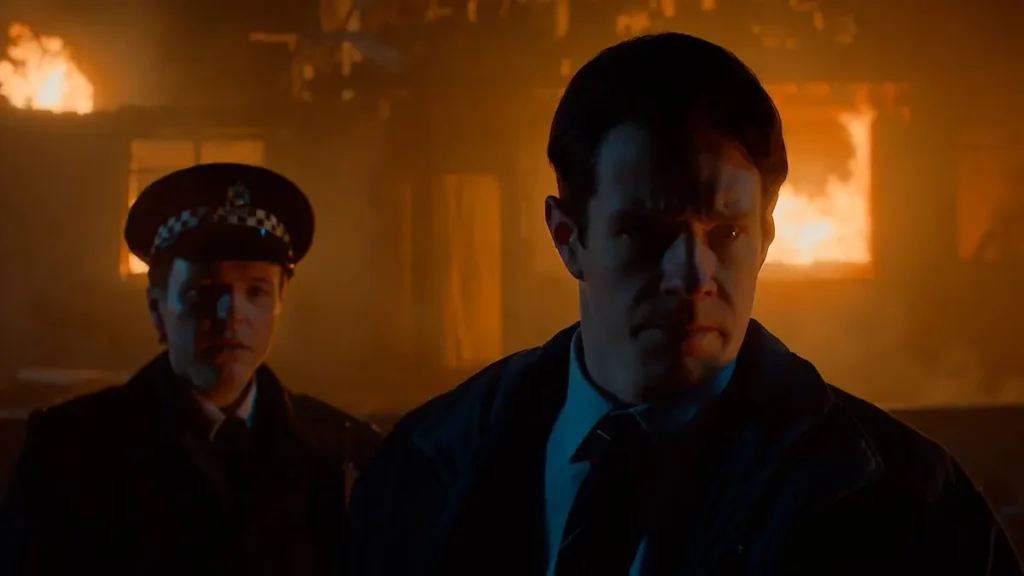
The investigation itself was not the most memorable part of the experience. It was the way the series kept coming back to the Lockerbie community. They were not government officials nor police officers. But then, just days before Christmas, they found wreckage and victims all over their town. These were ordinary people. Watching them assist investigators, sort through personal belongings and comfort grieving families offers a look at the tragedy that no graphic recreation ever could.
Here, too, is where the series sets itself apart from much of today’s true-crime television. It’s not into cliffhangers and shocking moments. Instead, there’s room for the quieter moments – the emotional toll of a case that stretched over years, not weeks, the long days spent searching fields for evidence, the conversations around kitchen tables. The series does drag a little in the last few episodes due to the slow pace, but this also adds to the authenticity of the story.
Concluding Remarks
The Bombing of Pan Am 103 is not a binge-worthy series where each episode ends with a major revelation. It’s the kind of show you keep watching because you care about the people trying to make sense of an unknowable event. What makes the show emotionally compelling is the humanity that supports the investigation.
By the end, I cared less about the politics or the final verdict than about Lockerbie itself, a small town suddenly caught up in a world tragedy. The series never forgets that behind every piece of evidence was a person, and behind every breakthrough were families waiting for answers. The unique thing about this drama is its quiet sense of compassion, which is what makes it haunting long after the credits have rolled.