
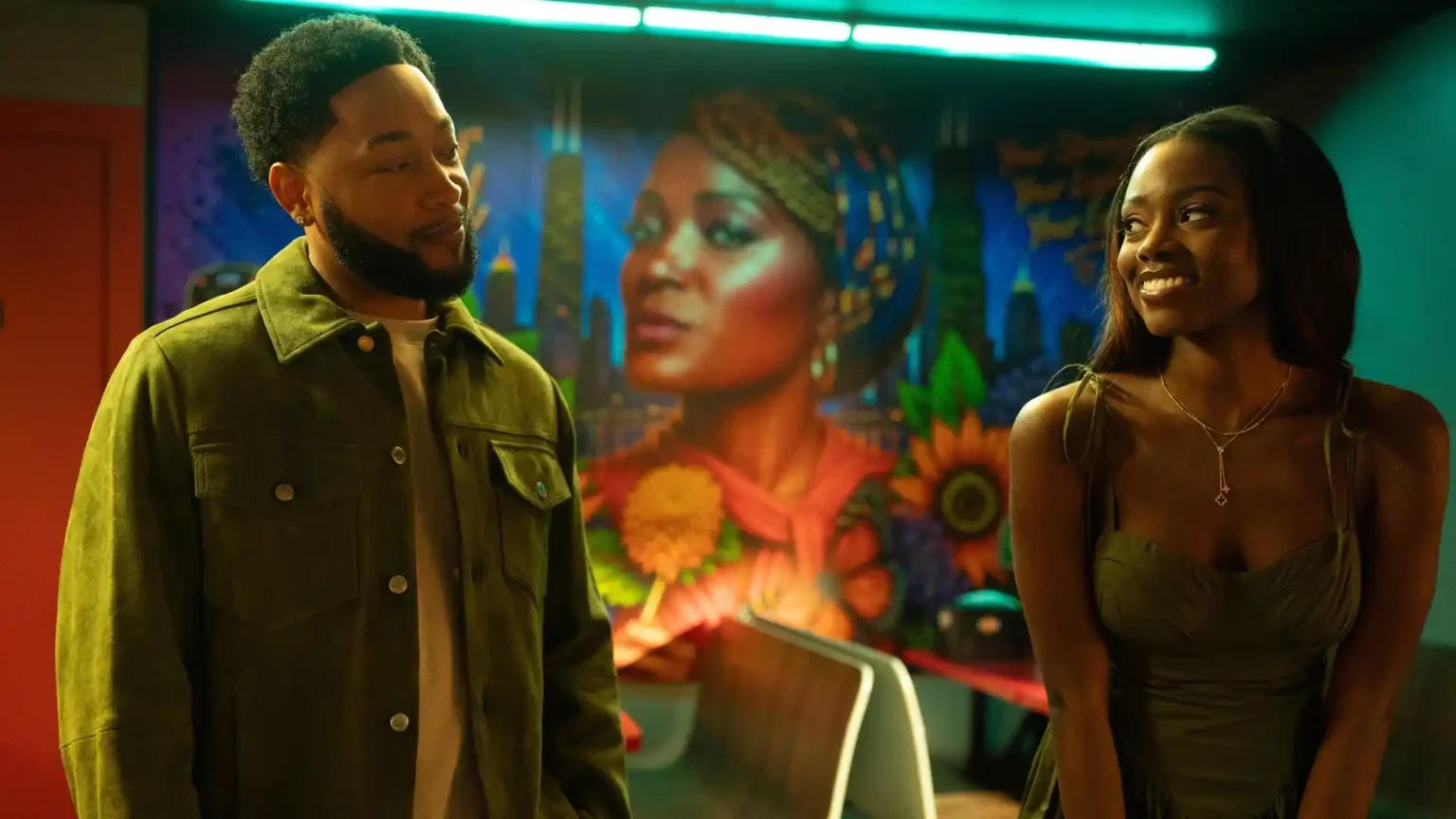
Lena Waithe’s The Chi has made its official exit. The Showtime series (available to stream on Paramount+), an eight-season fixture that put the socio-economic currents and hardy community ties of Chicago’s South Side under a microscope, is no more. With “The Last Dance,” the showrunners have put a definitive period to what they called the “coldest winter ever” for their cast, eschewing the kind of high-body-count spectacle one might expect from urban television in favor of something more reflective and concerned with legacy.
It was fitting for a series that has always managed to straddle the line between gritty street politics and the more private moments at home to spend its final hours working through years of generational trauma. A review of how the principal players were handled in this curtain call is in order.
Bakari’s Arc: From Street Soldier to Published Author
Bakari Bronson (Ahmad Nicholas Ferguson), whose transformation over the run of the series was among the most volatile. In the end, he is pitted against Nuck in a bid to put down some honest roots with Lynae. When a masked man with ties to Reg opens fire in a drive-by, the narrative comes close to the tragic, cyclical fate of so many young men before him. But the writers do not give in to nihilism; a year is allowed to pass and the trauma is put in perspective. Bakari’s survival is what puts an end to his time in the game, and he puts his experiences to paper. The finale leaves us with the sight of him at a book signing for his first novel, while Reg sits behind bars and reads it in silence. It is a way of putting the character above his surroundings. With a child on the way from Lynae, Bakari’s story is an earned one, proving that art can outlive the violence of the system.
Emmett and Kiesha: Anchoring the Domestic Front
You could say the emotional weight of the season was borne by Emmett Washington (Jacob Latimore) and Kiesha Williams (Birgundi Baker). After eight years of domestic friction and the sort of external volatility that comes with running an enterprise, the couple’s path was set for a more conventional course. “The Last Dance” gives fans the wedding they were waiting for, notwithstanding the unease sown by Tiff or Nuck in the lead up to it. Emmett has come full circle from an aimless hustler to the patriarch of the community. There is no subversion here for the sake of it; the two of them are the living proof of the show’s thesis, having carved out a measure of stability in an unyielding part of town.
Tiff, Nuck and the Underworld’s Exhaustion
The Chi also steers clear of any further criminal posturing in its closing chapter. Those who have been part of the drug trade under the thumb of Douda and Alicia are either gone, in prison or simply done with the war. Tiff (Hannaha Hall) has had her fill of the tenuous business dealings and the pull of Nuck. Her resolution is one of autonomy. By making herself fiscally and emotionally independent of the neighborhood’s destructive ways, Tiff makes a pragmatic point: in a world of territorial disputes, self-determination is the only thing of value.
In the end, “The Last Dance” is a verdict in itself. The series has opted for a thaw, both in the weather and in tone, rather than a bloodbath. It is a graceful way to sign off. The message is clear: the structural decay of the South Side is not going anywhere, but people have a way of adapting and looking after each other. Whether it is in the pages of a book or the quiet of a home, endurance is just the minimum. What remains after the snow has melted is the real victory.